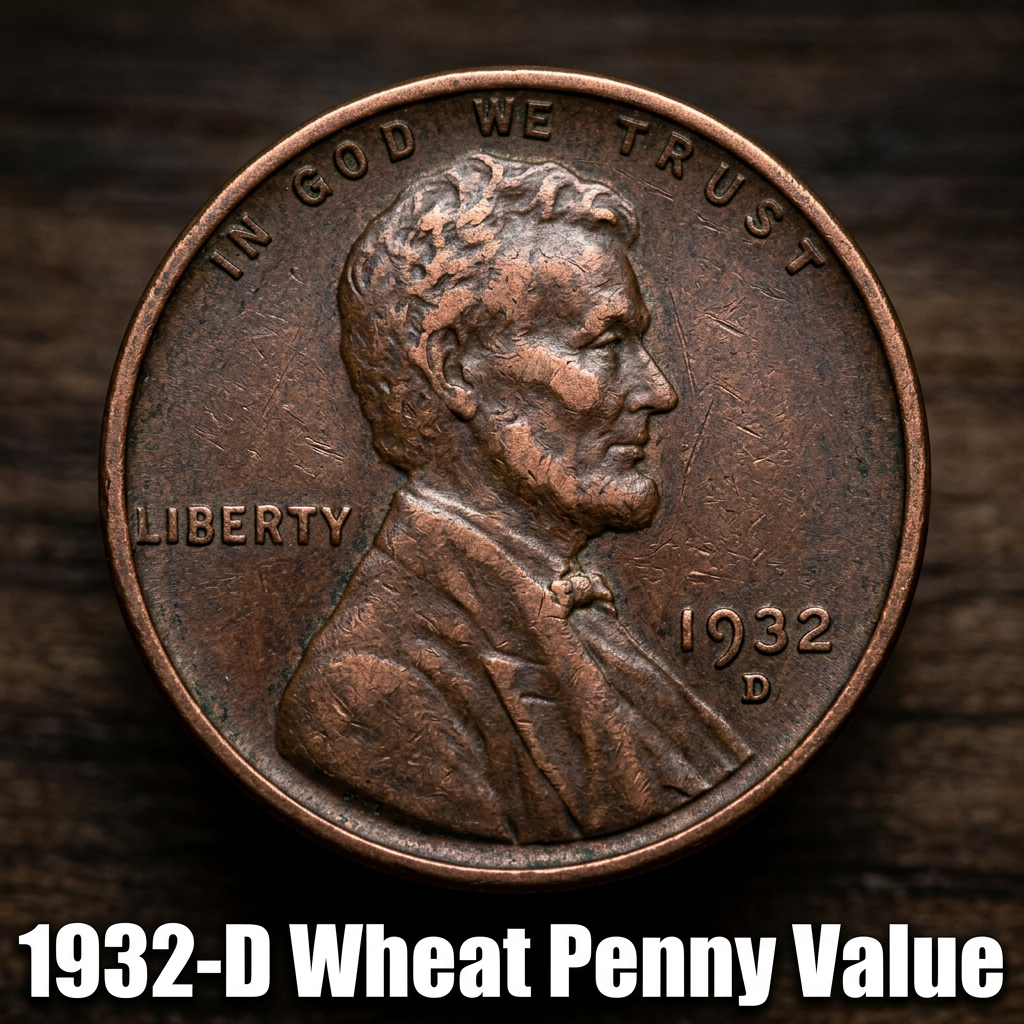
The 1932-D Wheat Penny is worth anywhere from $0.25 in heavily worn condition to over $100 or more in high mint state grades. If you found one of these coins in an old jar, a grandparent’s collection, or tucked away in a drawer, you might be sitting on more than just a penny — especially if it’s in nice shape.
What Is the 1932-D Wheat Penny?
The 1932-D Wheat Penny was struck at the Denver Mint during one of the hardest years of the Great Depression. That “D” mintmark sits just below the date on the obverse (front) of the coin, and it’s a key detail that affects the coin’s value.
Lincoln Wheat Pennies were minted from 1909 to 1958, and the 1932-D is considered a semi-key date. It had a relatively low mintage of just 10,500,000 coins — much lower than many other years in the series. That scarcity, combined with age, makes it more desirable than your average wheat cent.
If you’re not sure what you’re looking at, a coin identifier and value app can help you confirm the mintmark, date, and grade in seconds — no coin expertise required.
1932-D Wheat Penny Value by Grade
Coin values are heavily tied to condition, also known as “grade.” A penny that’s been in circulation for 90+ years will look very different from one that was never used. Here’s a general breakdown of what the 1932-D Wheat Penny is worth across different grades:
| Grade | Description | Estimated Value |
|---|---|---|
| Good (G-4) | Heavy wear, outlines visible | $0.25 – $1.00 |
| Fine (F-12) | Moderate wear, details clearer | $1.50 – $4.00 |
| Extremely Fine (EF-40) | Light wear, sharp details | $8.00 – $18.00 |
| About Uncirculated (AU-55) | Slight wear on high points | $20.00 – $40.00 |
| Mint State (MS-63) | No wear, some marks | $55.00 – $100.00+ |
| Mint State Red (MS-65 RD) | Full original red luster | $150.00 – $300.00+ |
For the most current auction prices and certified coin sales, you can check real-time 1932-D Wheat Penny price data in MS Red grades to see what collectors are actually paying right now.
How to Check the Condition of Your 1932-D Penny
Grading coins takes practice, but you can get a rough idea at home. Look at Lincoln’s cheekbone, the wheat stalks on the back, and the lettering. If you can see every detail clearly and the coin has a reddish-brown shine, it could be worth considerably more.
Coins with original red color (called “RD” by graders) are the most valuable. A brown or muted copper tone usually means it’s circulated or has toned over time — still worth keeping, but lower on the value scale.
CoinHix is a great tool to help you identify and value coins like this one quickly. Just snap a photo and the app gives you an instant grade estimate and market value — perfect if you’re going through a whole collection.
What Makes the 1932-D Wheat Penny Worth More
Beyond grade, a few other factors can push the value higher. Coins that have been certified and slabbed by PCGS or NGC carry a premium because the grade is verified and trusted by buyers.
Error coins are another big deal. While no major varieties are widely documented for the 1932-D, it’s always worth looking closely at your coin under magnification for doubled dies, off-center strikes, or repunched mintmarks.
Provenance also matters to serious collectors — meaning where the coin came from and whether it has any interesting history. For a more detailed breakdown of what affects the full value of a 1932 penny across different mints and conditions, it’s worth reading up before you decide to sell.
Should You Clean or Sell Your 1932-D Wheat Penny?
Here’s one of the most common mistakes people make: cleaning old coins. It feels natural to want a shiny penny, but cleaning removes the original surface and dramatically reduces value. Even a lightly cleaned coin can lose 50% or more of its collector value.
If you think your coin might be worth $20 or more, consider getting it professionally graded before selling. PCGS and NGC both offer submission services, and the added credibility can make a real difference at auction.
And if you’re just starting to sort through a coin collection, CoinHix makes it easy to get quick estimates on multiple coins at once — a major time-saver when you’re trying to figure out what’s worth keeping.
FAQ
Q: How do I know if my penny is a 1932-D or just a 1932?
A: Look just below the date on the front of the coin. If you see a small “D,” it was minted in Denver. No mintmark means it came from Philadelphia. The Denver coin is generally more valuable in most grades.
Q: Is a 1932-D Wheat Penny rare?
A: It’s considered a semi-key date in the Lincoln Wheat Penny series. With only 10.5 million minted, it’s not the rarest wheat cent, but it’s scarcer than most — and harder to find in nice condition.
Q: Where can I sell a 1932-D Wheat Penny?
A: Good options include eBay, coin shows, local coin dealers, and auction houses like Heritage Auctions. If your coin is in high grade, having it certified first will likely get you a better price. Apps like CoinHix can also help you understand its value before you negotiate.