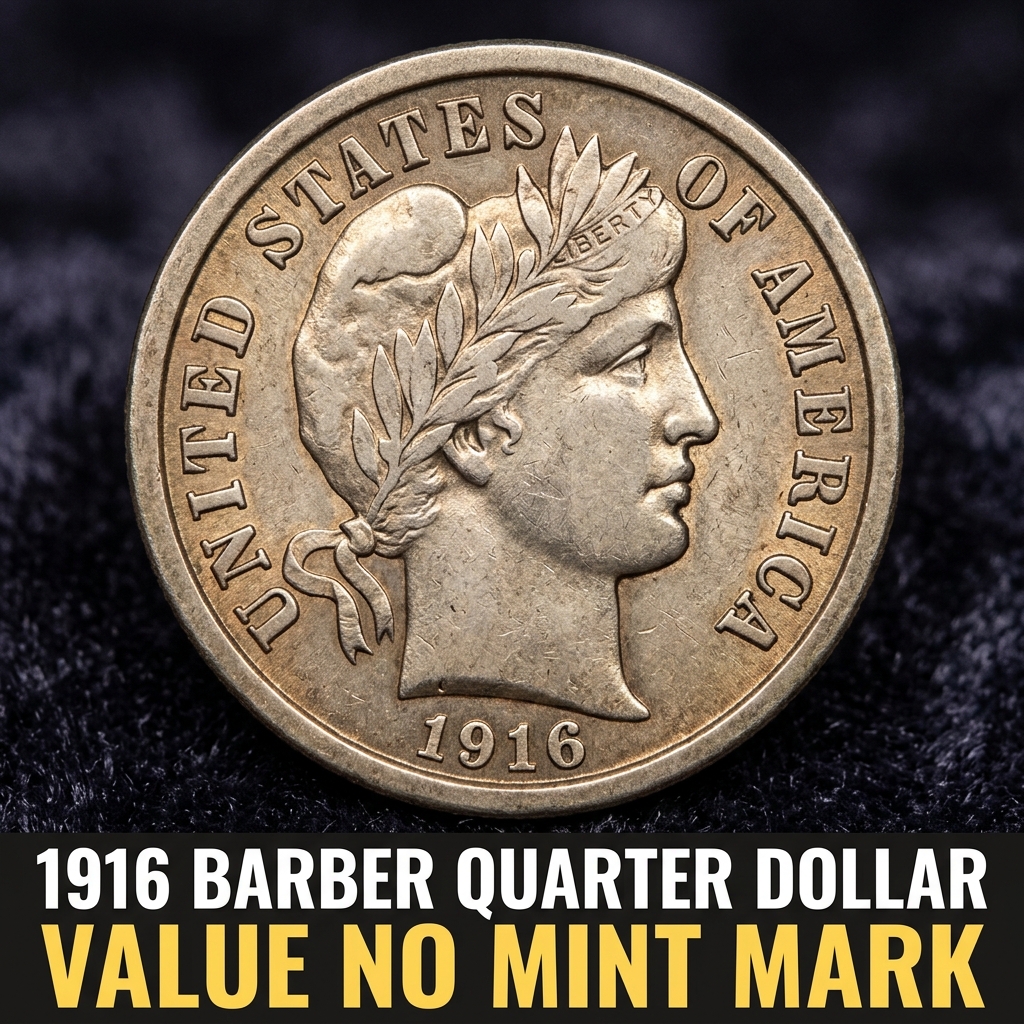
The 1916 Barber Quarter Dollar (no mint mark) is worth anywhere from $8 to $20 in heavily worn condition, and can climb well over $500 or even into the thousands in higher grades. If you found one of these old silver coins tucked away in a drawer or inherited collection, you may be holding something genuinely valuable.
What Is the 1916 Barber Quarter and Why Does It Matter?
The 1916 Barber Quarter was one of the final coins in a long-running series designed by Charles E. Barber, the Chief Engraver of the U.S. Mint. It was minted in Philadelphia — which is why coins from that facility carry no mint mark at all.
This particular year holds special significance. The Barber Quarter series ended in 1916, making this the last year of issue. Collectors love “final year” coins, and that demand pushes values higher than you might expect for a worn old quarter.
The coin features Lady Liberty on the obverse wearing a Phrygian cap, with the word LIBERTY across the headband. The reverse shows a heraldic eagle. It contains 90% silver, giving it a base metal value on its own.
If you want a quick and easy way to identify what you have, try using a coin identifier and value app before heading to a dealer — it can save you a lot of time and guesswork.
1916 Barber Quarter No Mint Mark Value by Grade
Coin grading is everything when it comes to determining what your 1916 Barber Quarter Dollar is worth. A coin in poor shape and a coin in brilliant uncirculated condition can differ in value by hundreds — sometimes thousands — of dollars.
Here’s a general value breakdown based on condition:
| Grade / Condition | Estimated Value |
|---|---|
| Poor / Fair (P-1 to F-2) | $8 – $12 |
| Fine (F-12) | $20 – $35 |
| Extremely Fine (EF-40) | $75 – $120 |
| About Uncirculated (AU-55) | $150 – $250 |
| Mint State (MS-63) | $500 – $800 |
| Mint State (MS-65+) | $1,500 and up |
Keep in mind these are approximate retail values. Actual prices depend on the coin market at the time of sale, eye appeal, and whether the coin has been cleaned or damaged.
For a more detailed look at current pricing, you can check out how much the 1916 Barber Quarter is worth across all grades and mint marks to compare your coin against recent sales data.
How to Tell If Your 1916 Quarter Is the Real Deal
First, check the date — it should clearly read 1916. Then look at the reverse of the coin for a mint mark. If there’s no letter beneath the eagle, your coin was struck at the Philadelphia Mint. Coins from Denver (D) and San Francisco (S) were also minted in 1916 and can carry different values.
Next, look at the word LIBERTY on the headband. On worn coins, this lettering fades first. If you can make out most of the letters, your coin likely grades around Fine or better — which already puts you in the $20–$35 range at minimum.
You can use CoinHix to scan your coin and get an instant grade estimate right from your smartphone. It’s one of the fastest ways to figure out what condition your coin is in without needing an expert nearby.
Also check for any cleaning or polishing marks. Cleaned coins lose significant collector value, even if they look shiny. A naturally toned coin with original surfaces will always be worth more to serious collectors.
Is the 1916 Barber Quarter Rare?
The Philadelphia Mint produced around 1.78 million 1916 Barber Quarters — which sounds like a lot, but after more than 100 years of circulation, wear, and loss, surviving examples in good condition are genuinely scarce.
High-grade examples (MS-64 and above) are especially hard to find. Most of the coins that have survived circulated heavily, meaning Mint State examples are few and far between.
CoinHix users frequently flag this coin as one worth holding onto. If yours grades even in the Extremely Fine range, you’re looking at a coin that most everyday collectors would love to add to their collection.
The combination of it being the final year of the Barber series, its 90% silver content, and its relative scarcity in high grades all work in your favor as a potential seller.
Should You Clean or Sell Your 1916 Barber Quarter?
Never clean your coin. This is the number one mistake people make. Even a quick rinse or polish with a cloth can permanently damage the surface and reduce the coin’s value by 50% or more in the eyes of collectors and dealers.
If you think you have a higher-grade example, consider having it professionally graded by PCGS or NGC — the two most trusted third-party grading services in the hobby. Encapsulated coins often sell for significantly more because buyers trust the grade.
If it’s heavily worn, you might simply sell it as a 90% silver coin for its melt value or list it on eBay as a circulated example. Either way, do your research first.
Frequently Asked Questions
Q: How do I know if my 1916 quarter has no mint mark?
A: Flip the coin over to the reverse (the eagle side) and look at the area just below the eagle. If there’s no letter (no D or S), it was made in Philadelphia and carries no mint mark — that’s your coin.
Q: Is a 1916 Barber Quarter worth more than face value even in poor condition?
A: Yes, absolutely. Even a heavily worn 1916 Barber Quarter No Mint Mark is worth at least $8 to $12 due to its 90% silver content and collector demand. Its melt value alone is typically above face value.
Q: What’s the best way to get an accurate value for my 1916 Barber Quarter?
A: Start with a reliable tool like CoinHix to get a quick grade estimate, then cross-reference with recent auction results or take the coin to a certified coin dealer for an in-person appraisal. Combining both methods gives you the clearest picture of what your coin is worth today.