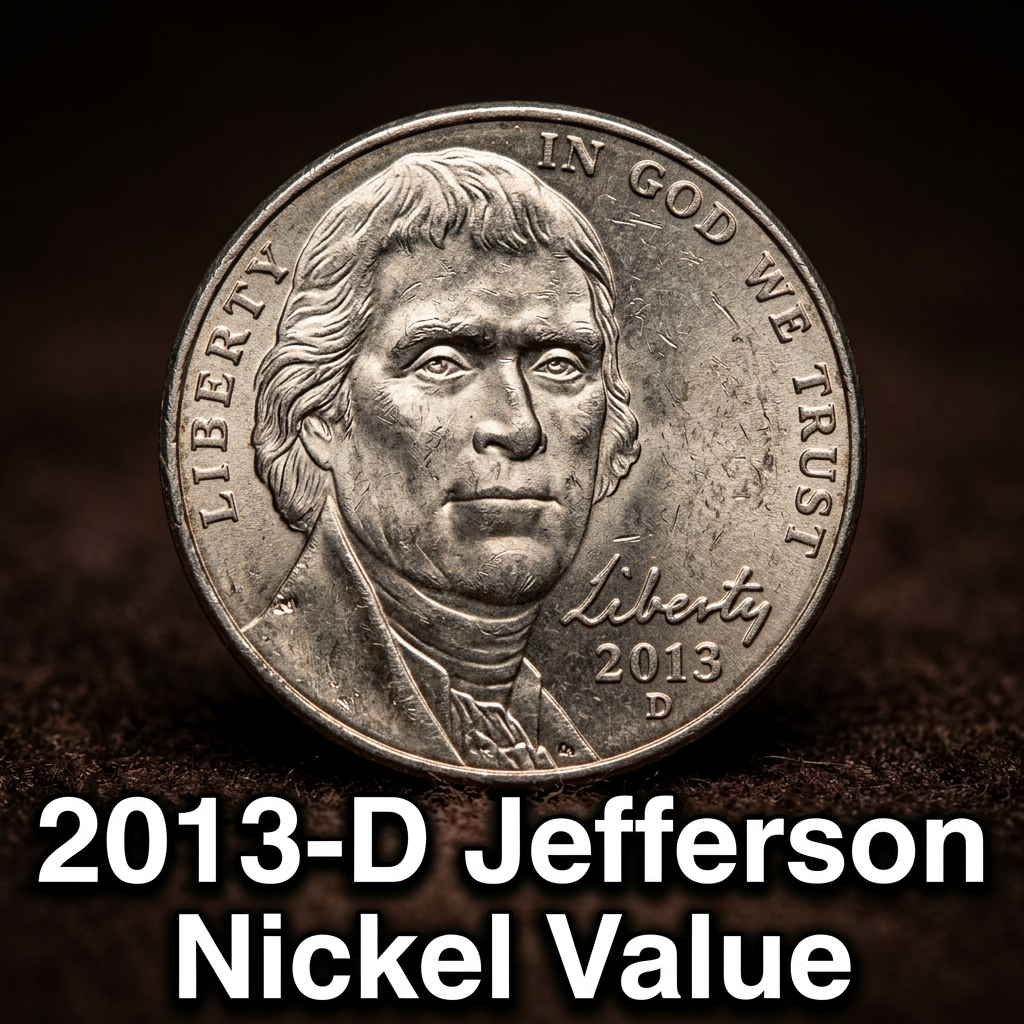
The 2013-D Jefferson Nickel is worth face value in circulated condition, but uncirculated examples can fetch anywhere from $0.10 to $5 or more depending on grade and eye appeal. If you found one in your change jar or a drawer, here’s everything you need to know.
So you stumbled across a 2013-D nickel and you’re wondering if it’s hiding some secret value. You’re not alone — millions of Americans dig through old coins every year hoping to find a hidden gem. The good news is that nickels from this era can occasionally surprise you, especially in high-grade mint state. If you’re not sure where to start, a coin identifier and value app can help you quickly figure out what you’ve got without needing to visit a dealer.
What Is the 2013-D Jefferson Nickel?
The 2013-D Jefferson Nickel was struck at the Denver Mint, indicated by the small “D” mintmark on the coin’s obverse (front), just to the right of Jefferson’s portrait. Denver produced hundreds of millions of nickels that year, making this a very common coin in terms of total mintage.
The obverse features a forward-facing portrait of President Thomas Jefferson, a design introduced in 2006 by artist Jamie Franki. The reverse shows Monticello, Jefferson’s famous Virginia estate, which has appeared on the nickel since 1938.
Because so many were made and most were used in everyday commerce, worn examples are abundant and carry no premium above face value. That said, coins preserved in original mint condition — never touched, never circulated — are a different story.
How Much Is a 2013-D Jefferson Nickel Worth Today?
For most people, the honest answer is five cents. Circulated 2013-D nickels are simply too common to command a premium.
However, if your coin looks brilliant and sharp — like it just came out of a mint bag — you might have something slightly more valuable. Collectors pay more for high-grade examples, especially those graded MS65 or above by PCGS or NGC.
Here’s a quick value table based on condition:
| Condition | Grade | Estimated Value |
|---|---|---|
| Circulated (worn) | G–VF | $0.05 (face value) |
| About Uncirculated | AU58 | $0.10 – $0.25 |
| Mint State | MS63–MS64 | $0.50 – $1.50 |
| Choice Mint State | MS65 | $2 – $5 |
| Gem Mint State | MS66–MS67 | $10 – $50+ |
For a deeper look at current Jefferson Nickel market prices across different grades, it helps to compare recent auction results alongside dealer asking prices.
What Makes Some 2013-D Nickels Worth More?
Grade is everything when it comes to modern coins like this one. A coin with full steps (FS) designation — meaning the steps on Monticello are fully struck and clearly defined — is especially prized by collectors.
Full Steps nickels are harder to find because the die-to-planchet striking pressure isn’t always perfect during mass production. When you do find one with five or six clean, uninterrupted steps on Monticello, that coin becomes a genuine collectible.
Eye appeal matters too. A coin with brilliant luster, no contact marks, and strong strike will always outperform a dull or baggy example of the same technical grade.
If you’re trying to evaluate your coin’s condition at home, CoinHix is a smart tool to start with. The app uses image recognition to help you assess grade and compare your coin against certified examples.
Should You Get It Graded?
Honestly, for most 2013-D nickels, professional grading (PCGS or NGC) isn’t worth the cost. Grading fees typically start around $20–$30 per coin, which far exceeds what even an MS65 example would sell for.
The exception? If your coin looks absolutely stunning — mirror-like luster, razor-sharp strike, and what appear to be Full Steps — it might be worth having a coin dealer take a look first. An MS67 Full Steps example could potentially fetch $50 or more, making the grading investment worthwhile.
You can also get a second opinion on value by checking detailed 2013 nickel value breakdowns by mint mark and grade before deciding whether to submit for certification.
For quick at-home assessments before spending money on grading, CoinHix gives you a fast, reliable baseline to work from.
How to Find the Mintmark on Your 2013 Nickel
Flip your coin over to the front (the side with Jefferson’s portrait). Look just to the right of his image near the date — you’ll see a small letter. A “D” means Denver. A “P” means Philadelphia. No mintmark? That would make it unusual for this era, but all modern nickels carry a mintmark.
The D and P versions have similar values, though some collectors have a slight preference for one mint over another depending on population reports from PCGS and NGC. CoinHix lets you filter by mintmark so you can compare values side by side.
FAQ About the 2013-D Jefferson Nickel
Q: Is a 2013-D Jefferson Nickel rare?
A: No, it’s not rare. The Denver Mint struck hundreds of millions of them for general circulation. Most examples you find in pocket change are worth only face value. Rarity kicks in only for top-grade MS67 or MS67 Full Steps examples.
Q: What does “Full Steps” mean on a Jefferson Nickel?
A: Full Steps (FS) refers to the steps leading up to Monticello on the reverse being fully and clearly struck. Collectors prize FS coins because many nickels from this era are weakly struck in that area. A Full Steps designation from PCGS or NGC can significantly increase a coin’s value.
Q: How can I tell if my 2013-D nickel is in mint state condition?
A: Look for original luster — a cartwheel sheen that catches light as you rotate the coin. There should be no wear on the high points of Jefferson’s cheekbone and hair. Any dullness, flatness, or rubbing on those areas indicates the coin circulated and is worth face value. Apps like CoinHix can help you compare your coin’s appearance to graded examples.