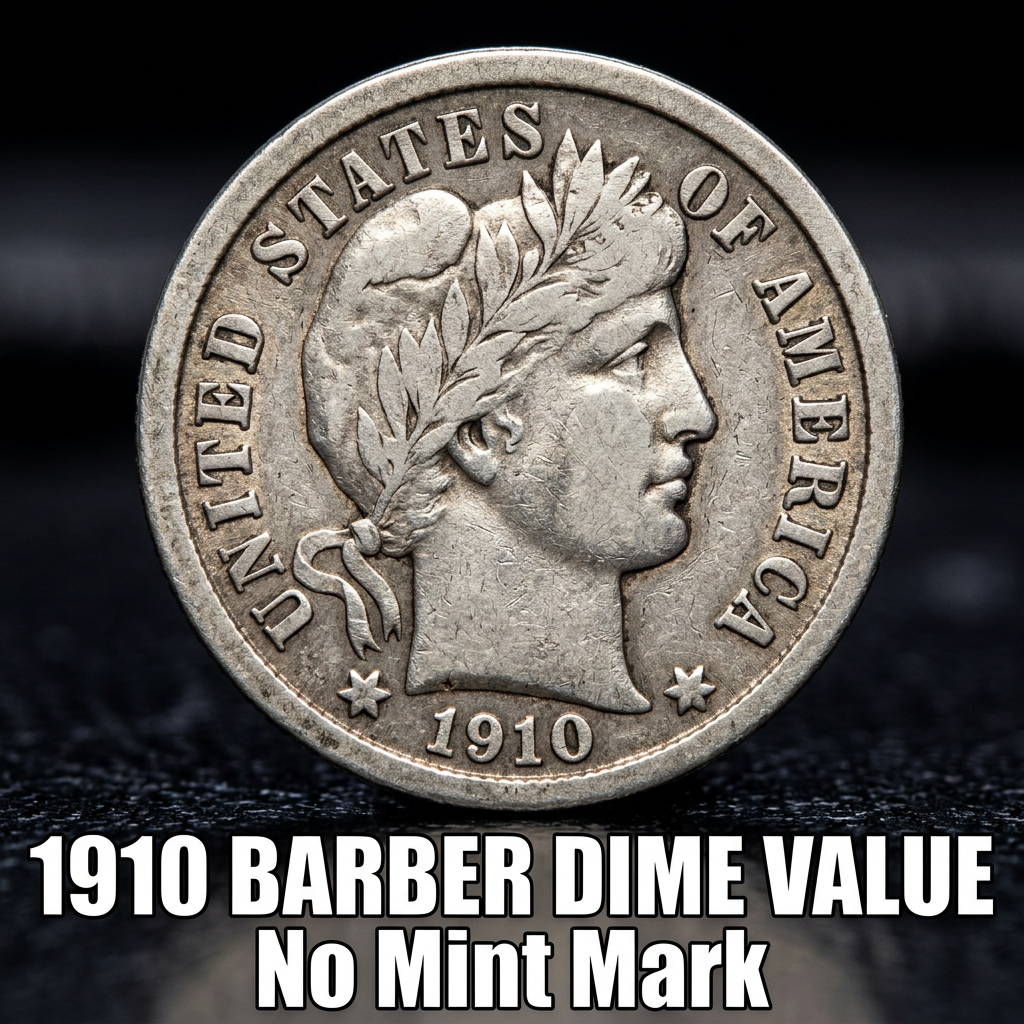
The 1910 Barber Dime with no mint mark is worth anywhere from $3 to $10 in heavily worn condition, but well-preserved examples can fetch $30 to $150 or more depending on grade. If you found one of these silver coins tucked away in a drawer or old collection, you might be sitting on more than pocket change.
What Is a 1910 Barber Dime?
The 1910 Barber Dime was minted at the Philadelphia Mint, which is why it carries no mint mark. It’s part of the Barber coinage series designed by Chief Engraver Charles E. Barber, who gave the coin its name. These dimes were produced from 1892 to 1916, making the 1910 issue a mid-series coin with solid collector appeal.
The obverse features Lady Liberty wearing a Phrygian cap and laurel wreath, with the word LIBERTY inscribed on the headband. The reverse shows a wreath surrounding the words ONE DIME. The coin is made of 90% silver, which gives it intrinsic metal value even in worn condition.
If you’re not sure whether what you have is actually a 1910 Barber Dime, a good coin identifier and value app can help you confirm the design, date, and mint mark details quickly without needing to visit a dealer right away.
How Condition Affects the 1910 Barber Dime Value No Mint Mark
Coin condition — also called grade — is the single biggest factor in determining what your 1910 Barber Dime is worth. Barber Dimes were circulated heavily, and most surviving examples show significant wear. Even so, there’s a big difference between a barely readable coin and one with clear detail.
Collectors use a scale from Poor (P-1) all the way up to Mint State (MS-65 and beyond). The word LIBERTY on the headband is a key grading point for Barber Dimes. If that word is fully readable, you’ve got a coin worth considerably more than one where it’s worn smooth.
Here’s a general value guide based on condition:
| Grade | Description | Estimated Value |
|---|---|---|
| Good (G-4) | Heavy wear, outline visible | $3 – $5 |
| Very Good (VG-8) | Some detail, LIBERTY partial | $6 – $10 |
| Fine (F-12) | Moderate wear, LIBERTY clear | $12 – $20 |
| Extremely Fine (EF-40) | Light wear on high points | $30 – $55 |
| Mint State (MS-63) | Uncirculated, minor marks | $100 – $175 |
| Mint State (MS-65) | Gem uncirculated | $250 – $400+ |
Silver Content and Melt Value
Even a heavily worn 1910 Barber Dime has a built-in floor value thanks to its silver content. Each coin contains approximately 0.0723 troy ounces of pure silver. When silver prices hover around $28 to $30 per ounce, the melt value alone comes out to roughly $2.00 to $2.20 per coin.
That means even the most beat-up examples aren’t worthless — they carry real precious metal value. Collectors and dealers are well aware of this, which is why Barber Dimes in any condition tend to sell above face value.
For a more detailed look at how silver prices and grade interact with the current market value of the 1910 Barber Dime, it’s worth checking up-to-date pricing resources before you decide to sell or trade.
Tips for Getting the Best Price on Your 1910 Barber Dime
If you think you have a nice example, don’t rush to sell. Start by cleaning nothing — cleaning a coin can permanently destroy its surface and reduce its collector value by 50% or more. Leave it exactly as you found it.
Next, take a close-up photo in natural light and use CoinHix to identify and value your coin quickly. CoinHix uses advanced image recognition to help everyday people figure out what they have without needing expert knowledge. It’s one of the most practical tools out there for someone who just found an old coin and wants honest, fast answers.
If the coin grades EF or better, consider submitting it to a professional grading service like PCGS or NGC. A graded and slabbed coin is far easier to sell at fair market value because buyers can trust the grade.
Where to Sell a 1910 Barber Dime
Common selling options include eBay, local coin dealers, coin shows, and online coin marketplaces. For circulated examples worth under $20, eBay tends to give you the widest audience. For higher-grade pieces, a coin dealer or auction house may get you a better return.
Before listing anywhere, use CoinHix to double-check your coin’s details and get a baseline value estimate. Knowing what you have before you walk into a shop means you’re far less likely to leave money on the table.
—
Frequently Asked Questions
Q: How do I know if my 1910 dime is a Barber Dime?
A: Look at the front of the coin. If it shows a left-facing portrait of Liberty wearing a cap with the word LIBERTY on the headband, you have a Barber Dime. The date 1910 will appear at the bottom of the obverse. There should be no mint mark on a Philadelphia issue — check below the wreath on the reverse to confirm there’s no letter present.
Q: Is a 1910 Barber Dime with no mint mark rare?
A: Not especially rare — the Philadelphia Mint produced over 11.5 million Barber Dimes in 1910, making it a relatively common date in the series. However, finding one in high grade (EF or above) is genuinely difficult because most were heavily circulated. High-grade examples are where real scarcity and value come in.
Q: Should I clean my 1910 Barber Dime before selling it?
A: Absolutely not. Cleaning removes the natural patina and surface luster that collectors prize. Even a light polish with a cloth can scratch the metal under magnification and drop your coin’s grade significantly. Sell it as-is for the best possible price.