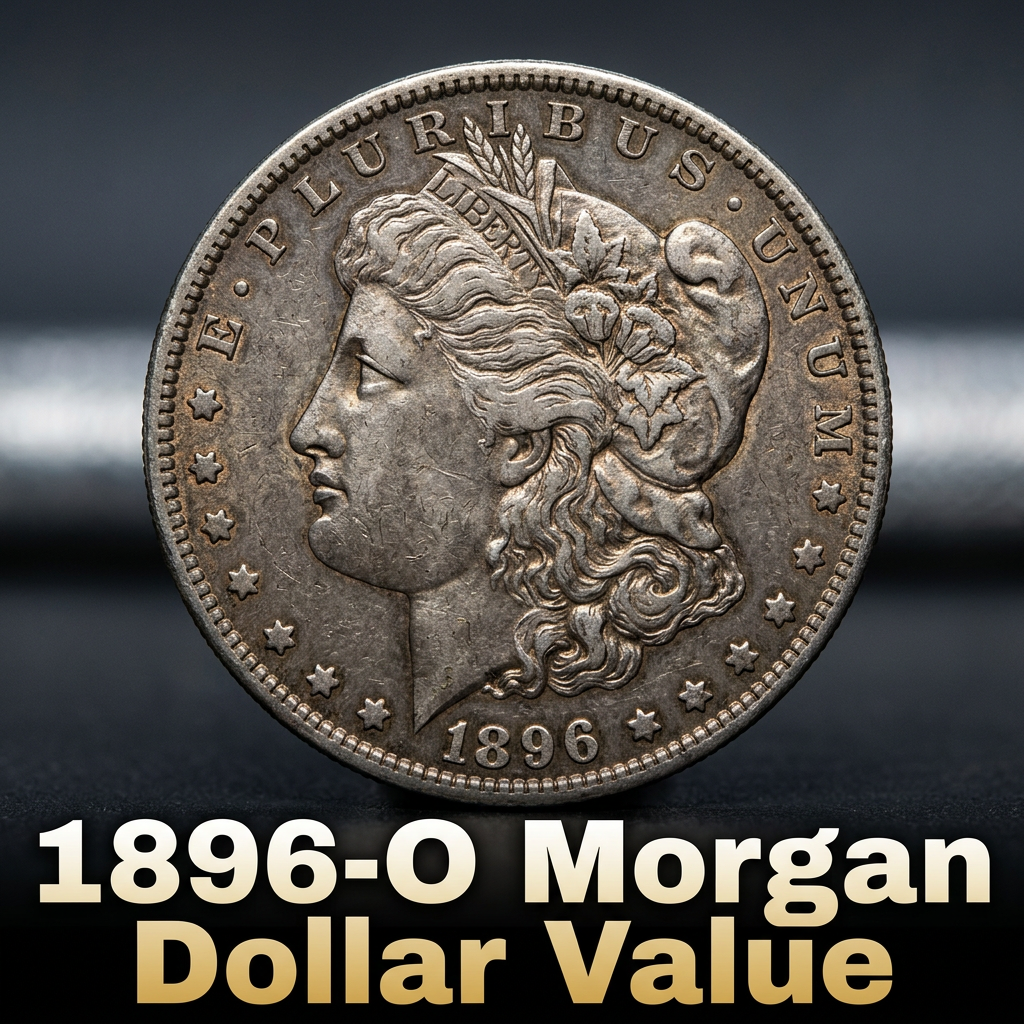
The 1896-O Morgan Dollar is worth anywhere from $30 in heavily worn condition to well over $2,000 or more in high mint state grades — and certain rare examples have sold for tens of thousands of dollars at auction. If you’ve found one of these old silver dollars in a drawer, a box of coins, or an estate collection, you may be holding something seriously valuable.
If you’re not sure how to identify your coin or read its grade, a coin identifier and value app can help you figure out exactly what you have before you take it anywhere for sale.
—
What Is the 1896-O Morgan Dollar?
The 1896-O Morgan Dollar was struck at the New Orleans Mint in 1896, one of the most iconic silver dollar series in American history. The “O” mintmark, found on the reverse just above the “DO” in “DOLLAR,” tells you exactly where it was made.
Designed by George T. Morgan, these coins contain 90% silver and weigh 26.73 grams. They feature Lady Liberty on the obverse and a majestic eagle on the reverse. The New Orleans Mint produced 4,900,000 of them that year — not a tiny number, but surviving examples in nice condition are surprisingly scarce.
That scarcity in higher grades is what drives collector demand. Many of these coins were used in everyday commerce, meaning most surviving examples show heavy wear. Finding one in fine or better condition is the exception, not the rule.
—
1896-O Morgan Dollar Value by Grade
The value of your 1896-O Morgan Dollar depends almost entirely on its condition, or “grade.” Coin grading runs from Poor (P-1) at the low end to Mint State (MS-65 and above) at the top. Here’s a general breakdown of what you can expect:
| Grade | Description | Estimated Value |
|---|---|---|
| Good (G-4) | Heavy wear, outline visible | $30 – $40 |
| Very Good (VG-8) | Moderate wear, some detail | $40 – $60 |
| Fine (F-12) | Even wear, major details clear | $60 – $90 |
| Very Fine (VF-20) | Light to moderate wear | $90 – $150 |
| Extremely Fine (EF-40) | Slight wear on high points | $200 – $350 |
| About Uncirculated (AU-50) | Trace wear only | $400 – $700 |
| Mint State (MS-60 to MS-63) | No wear, some marks | $800 – $2,000+ |
| Mint State (MS-64 and above) | Exceptional condition | $3,000 – $20,000+ |
For the most up-to-date auction results and dealer pricing, you can check out current 1896-O Morgan Dollar price data in mint state grades — it’s one of the best places to track what collectors are actually paying right now.
—
Why the 1896-O Is Tricky to Grade
Here’s the thing about the 1896-O Morgan Dollar that even experienced collectors respect: it’s notoriously difficult to find in high grades. The New Orleans Mint had a reputation during this era for producing coins with weak strikes, meaning fine detail on Liberty’s hair and the eagle’s feathers may appear flat even on uncirculated examples.
This means a coin that looks “almost perfect” to an untrained eye might grade lower than expected once examined by a professional.
It also means that when a truly sharp, well-struck 1896-O Morgan Dollar appears at auction, it commands a serious premium. Coins graded MS-64 or MS-65 by PCGS or NGC can sell for thousands of dollars above what a less sharp example would fetch.
If you want a professional opinion on your specific coin, CoinHix is a smart starting point — it gives you real market data and helps you compare your coin to recent sales across all grades.
—
Silver Value: Your Floor Price
Even if your 1896-O Morgan Dollar is heavily worn and has little collector value, it still contains 0.7734 troy ounces of pure silver. With silver prices fluctuating around $28–$32 per ounce (as of recent market rates), that means the raw silver melt value alone is roughly $22–$25.
That’s your baseline — no Morgan Dollar is worthless, because silver never goes to zero.
Most worn 1896-O examples will sell for a modest premium above melt value due to collector demand, especially to dealers who need inventory. Don’t let anyone talk you into selling a coin in good condition for just its silver weight without doing your research first.
For a full breakdown of what your coin might be worth at every grade level, this guide on 1896 silver dollar value across all conditions and mint marks is worth bookmarking.
—
How to Get the Best Price for Your 1896-O Morgan Dollar
If you think you have a coin worth selling, here are a few practical tips:
First, do not clean your coin. Even a light polish can destroy numismatic value and drop a coin’s grade significantly. Collectors want coins in original, natural condition — even if they look a little dark or spotted.
Second, get it authenticated if it grades AU-50 or better. A coin certified by PCGS or NGC sells for significantly more than a raw, ungraded coin of the same quality, because buyers trust the third-party grade.
Third, compare prices before selling. Use CoinHix to look up recent auction results, and compare offers from at least two or three coin dealers. The difference in offers can be surprisingly large.
Finally, if you’re not sure what you have, use a reliable CoinHix-powered tool or a trusted coin identifier and value app to get a starting point before walking into any coin shop.
—
FAQ
Q: How do I know if my coin is the 1896-O Morgan Dollar and not another year or mint?
A: Look at the date on the obverse (front) of the coin — it should clearly read “1896.” Then flip it to the reverse and look above the “DO” in “DOLLAR” near the bottom. If you see a small “O,” it was minted in New Orleans. No mintmark means it came from Philadelphia.
Q: Is the 1896-O Morgan Dollar rare?
A: The mintage of nearly 5 million makes it a common date in circulated grades. However, examples in Mint State — especially MS-64 and above — are genuinely rare due to the weak strike issues associated with the New Orleans Mint during this period. In top pop grades, it’s considered a key condition rarity.
Q: Where is the best place to sell my 1896-O Morgan Dollar?
A: For worn coins, a local coin dealer or online platforms like eBay can work well. For coins grading EF-40 or better, consider having it certified first and selling through a major coin auction house like Heritage Auctions or Stack’s Bowers. Always compare multiple offers and research current market values using tools like CoinHix before committing to a sale.