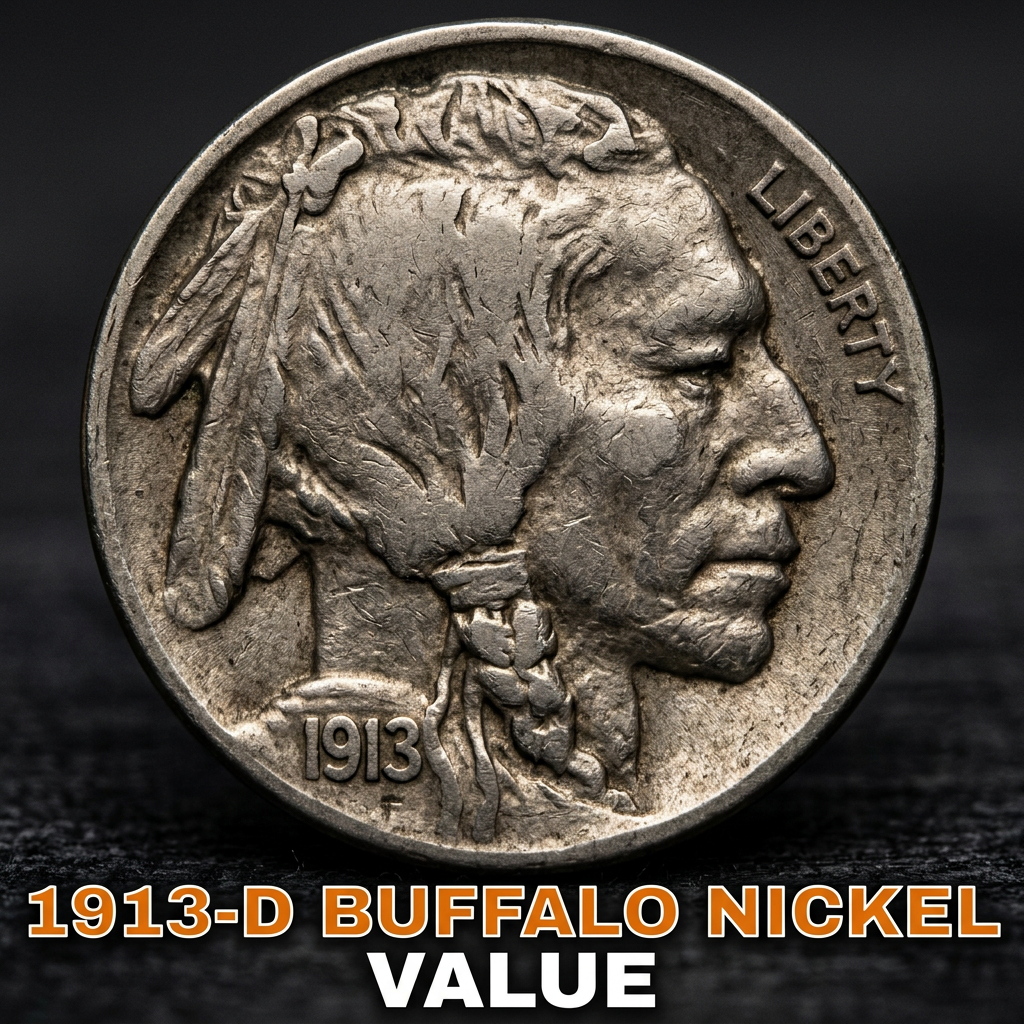
The 1913-D Buffalo Nickel is worth anywhere from $20 in heavily worn condition to well over $1,000 or more in high mint state grades — and some pristine examples have sold for thousands at major auctions. If you found one of these nickels in an old coin jar or inherited collection, you might be sitting on something genuinely valuable. This guide will walk you through everything you need to know, in plain everyday language.
What Makes the 1913-D Buffalo Nickel Special
The 1913-D Buffalo Nickel was minted at the Denver Mint, which is what the “D” mintmark stands for. It was part of the very first year of production for the Buffalo Nickel series, also called the Indian Head Nickel, designed by sculptor James Earle Fraser. That first-year status alone makes it a coin collectors actively seek out.
There are actually two types of 1913 Buffalo Nickels. The Type 1 has the bison standing on a raised mound, while the Type 2 shows the bison standing on a flat line. Both were issued in 1913, and the Denver Mint struck both types. The mintmark appears on the reverse (tails side) of the coin, just below the words “FIVE CENTS.”
If you’re not sure which type you have or want a quick identification, you can use a coin identifier and value app right from your phone to get an instant read on what you’re holding.
How Much Is a 1913-D Buffalo Nickel Worth Today
Value depends heavily on condition. A coin that’s been sitting in a pocket for decades will show heavy wear on the high points — especially the Native American’s cheekbone and the bison’s horn and shoulder. These worn spots are the first things a coin dealer will look at.
Here’s a general value breakdown by grade:
| Grade / Condition | Estimated Value |
|---|---|
| Good (G-4) | $20 – $35 |
| Fine (F-12) | $50 – $80 |
| Extremely Fine (EF-40) | $150 – $250 |
| About Uncirculated (AU-55) | $300 – $500 |
| Mint State (MS-63) | $800 – $1,500+ |
| Gem Mint State (MS-65) | $3,000 – $6,000+ |
For the most current market data, you can review live 1913-D Buffalo Nickel auction prices and grade-by-grade values to see what collectors are actually paying right now.
Type 1 vs Type 2 — Does It Matter for Value
Yes, it matters quite a bit. The 1913-D Type 1 Buffalo Nickel generally carries a premium over the Type 2 in most grades. This is because the Type 1 design was produced for a shorter window in 1913 before the U.S. Mint made changes to the reverse design.
The Type 1 reverse (bison on mound) tends to wear differently than the Type 2, and the overall mintage numbers differ between the Denver examples of each type. Collectors and dealers will always ask which type you have, so it’s worth identifying yours carefully before you try to sell.
If you’re unsure, CoinHix is a great resource for checking certified sale records and comparing examples of both types side by side.
How to Check the Condition of Your 1913-D Buffalo Nickel
Condition is everything in coin collecting, and Buffalo Nickels are famously prone to weak strikes and fast wear. Here’s what to look for when you examine your coin:
Obverse (heads side): Look at the Native American’s cheekbone and the braid of hair behind the ear. In well-worn coins, these areas will be flat and featureless. In better condition coins, you’ll see distinct hair detail and a clear facial profile.
Reverse (tails side): Focus on the bison’s horn and the front shoulder area. These are the highest points and wear down first. Also check the mintmark — it should read “D” clearly below “FIVE CENTS.”
You can get a quick estimated value for your specific coin by checking a detailed 1913 nickel value guide with condition-based pricing that breaks things down by grade and mint.
For a fast at-home identification, the CoinHix app lets you scan your coin and get an instant grade estimate and current market value — no coin expertise required.
Where to Sell a 1913-D Buffalo Nickel
If your coin looks like it might be in decent or better condition, it’s worth getting a professional opinion before selling. Options include:
– Local coin dealers — quick and easy, but they’ll offer wholesale prices
– Online auction sites — broader market, but takes more time and effort
– Professional grading services (PCGS or NGC) — submitting for certification can dramatically increase what a buyer will pay for higher-grade coins
For coins in circulated condition (Good through Extremely Fine), a local dealer or online sale is usually the most practical path. For coins that appear uncirculated or nearly so, consider professional grading — the certification can add hundreds or even thousands of dollars to the final sale price.
—
FAQ
Q: How do I know if my Buffalo Nickel is a 1913-D?
A: Look at the date on the obverse (heads side) — it should read 1913. Then flip the coin over and look below “FIVE CENTS” on the reverse. If you see a small “D” mintmark, it was made at the Denver Mint, making it a 1913-D.
Q: Is the 1913-D Buffalo Nickel rare?
A: It’s not considered rare in circulated grades, but it is genuinely scarce in high mint state condition. The Denver Mint produced millions of them, but most saw heavy use in everyday commerce. Finding one in Extremely Fine or better is increasingly uncommon.
Q: Can I clean my 1913-D Buffalo Nickel to make it look better?
A: Please don’t. Cleaning a coin almost always destroys its numismatic value, even if it makes the coin look shinier. Collectors and dealers can spot cleaning instantly, and a cleaned coin will sell for significantly less than an original, uncleaned example in the same grade.