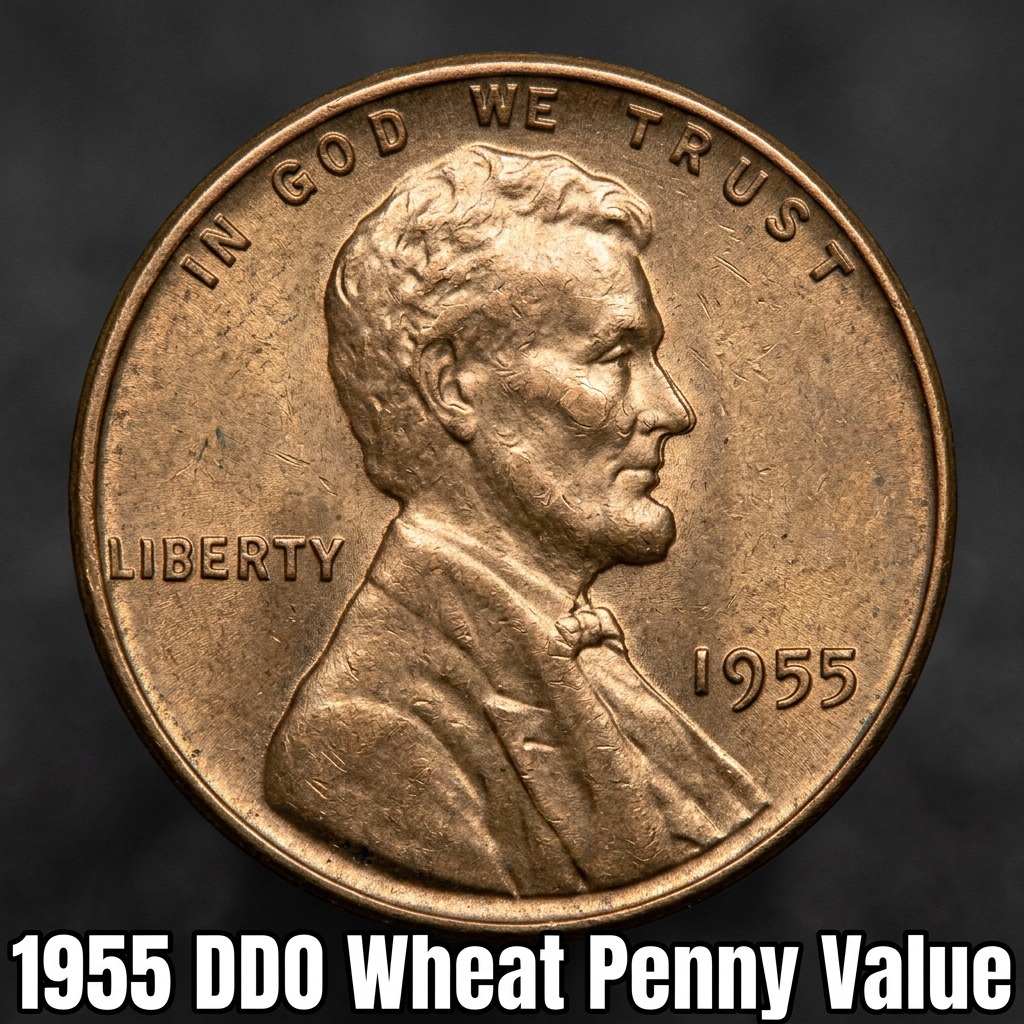
The 1955 Doubled Die Obverse Wheat Penny is one of the most famous error coins in American numismatic history, and it’s worth anywhere from $1,000 in heavily worn condition to over $15,000 or more in mint state. If you found one of these in an old coin jar or inherited a collection, you may be sitting on a serious treasure.
What Makes the 1955 DDO So Special?
The 1955 Doubled Die Obverse — commonly called the 1955 DDO — is not just any old wheat penny. It’s a genuine mint error that happened when a working die was accidentally hubbed twice at slightly different angles during production at the Philadelphia Mint.
The result? A coin where the date, the word “LIBERTY,” and the phrase “IN GOD WE TRUST” all appear dramatically doubled — visibly so, even to the naked eye. This wasn’t a minor mistake. It was so obvious that some mint workers reportedly tried to pull the coins from production, but an estimated 20,000 to 24,000 of them still made it into circulation.
That combination of rarity, drama, and story is exactly what drives collector demand — and prices — sky high.
If you want to quickly check whether your coin matches the real deal, a coin identifier and value app can help you compare images and get an instant read on what you might have.
How to Identify the Real 1955 DDO Wheat Penny
The doubling on a genuine 1955 DDO is dramatic and unmistakable. You don’t need a loupe or a microscope — just look at the date and the word “LIBERTY” on the obverse (heads side) of the coin. If you see a strong, clear shadow or echo of those letters and numbers, that’s your signal.
Here’s what to look for:
– The “1955” date will appear clearly doubled, almost as if printed twice
– “LIBERTY” will have a visible second layer of letters right next to the original
– “IN GOD WE TRUST” will also show doubling
– The reverse (tails side) will look completely normal — doubling only affects the obverse
Be careful, though. There are many counterfeits and altered coins out there. Some fakes are made by adding solder or machine doubling to regular 1955 pennies. Machine doubling looks flat and shelf-like, not bold and separated like the genuine DDO. When in doubt, get the coin certified by PCGS or NGC.
1955 DDO Wheat Penny Value by Grade
Condition matters enormously with this coin. A heavily worn example is still worth real money, but a well-preserved specimen can fetch tens of thousands of dollars at auction.
| Grade | Description | Estimated Value |
|---|---|---|
| G-4 (Good) | Heavy wear, doubling still visible | $1,000 – $1,500 |
| VG-8 (Very Good) | Moderate wear, major details clear | $1,500 – $2,200 |
| F-12 (Fine) | Light to moderate wear | $2,200 – $3,500 |
| VF-20 (Very Fine) | Light wear on high points | $3,500 – $5,500 |
| EF-40 (Extremely Fine) | Slight wear, sharp details | $5,500 – $8,000 |
| MS-63 (Mint State) | Uncirculated, minor blemishes | $10,000 – $15,000+ |
| MS-65 (Gem Mint State) | Exceptional eye appeal | $25,000 – $50,000+ |
You can find up-to-date 1955 DDO Wheat Penny price data by grade and mint state to see how recent auction results compare across different condition levels.
Where and How to Sell a 1955 DDO Penny
If you believe you have a genuine 1955 DDO Wheat Penny, the smartest first move is authentication. Submit it to PCGS or NGC for grading. A certified coin in a slab sells for significantly more than a raw coin, because buyers trust the grade.
Once certified, your selling options include:
– Heritage Auctions or Stack’s Bowers — the top auction houses for rare coins
– eBay — wide audience, but research recent sold listings carefully
– Local coin dealers — convenient but may offer wholesale prices
– Coin shows — good for networking with serious buyers
Don’t sell in a hurry. The 1955 DDO is rare enough that patient sellers almost always do better. CoinHix is a great tool to track current market prices and recent sales so you know exactly what your coin is worth before you commit to any deal.
Don’t Confuse It With the Regular 1955 Wheat Penny
It’s worth noting that a normal 1955 Wheat Penny — without the doubled die — is a completely different story in terms of value. A regular 1955 Philadelphia issue in circulated condition is worth about 10 to 25 cents, and even in mint state it rarely tops $5 to $10.
The 1955-D (Denver) and 1955-S (San Francisco) pennies are similarly common and low in value. So the mint mark — or lack of one — matters a lot. The DDO was struck only at Philadelphia, meaning it carries no mint mark.
For a complete breakdown of all 1955 penny varieties and their values, this detailed guide to 1955 penny values covers every issue and condition so you can make sure you’re comparing the right coin.
If you’re not sure what you have, try scanning your coin with CoinHix — the app can help you identify the variety and give you a real-time value estimate without any guesswork.
Frequently Asked Questions
Q: How do I know if my 1955 penny is the doubled die variety?
A: Look at the date and the word “LIBERTY” on the heads side of the coin. If you see strong, visible doubling — where the letters and numbers appear to have a bold shadow or second image right next to them — you likely have the DDO. The doubling should be clear without magnification. If you’re unsure, use CoinHix to compare your coin against verified examples, or submit it to a professional grading service like PCGS or NGC.
Q: Is a worn 1955 DDO still worth a lot of money?
A: Yes, absolutely. Even a heavily worn 1955 DDO in Good (G-4) condition is typically worth $1,000 or more. Because the doubling on this coin is so dramatic, it remains visible even through significant wear, which keeps collector demand — and prices — strong across all grade levels.
Q: Can I find a 1955 DDO in circulation today?
A: It’s extremely unlikely but not completely impossible. Most examples were pulled from circulation decades ago by collectors who recognized their value. That said, coins do occasionally surface in old jars, estate collections, or inherited coin rolls. If you’re searching through old wheat pennies, always check the 1955-dated ones carefully — the payoff could be enormous.