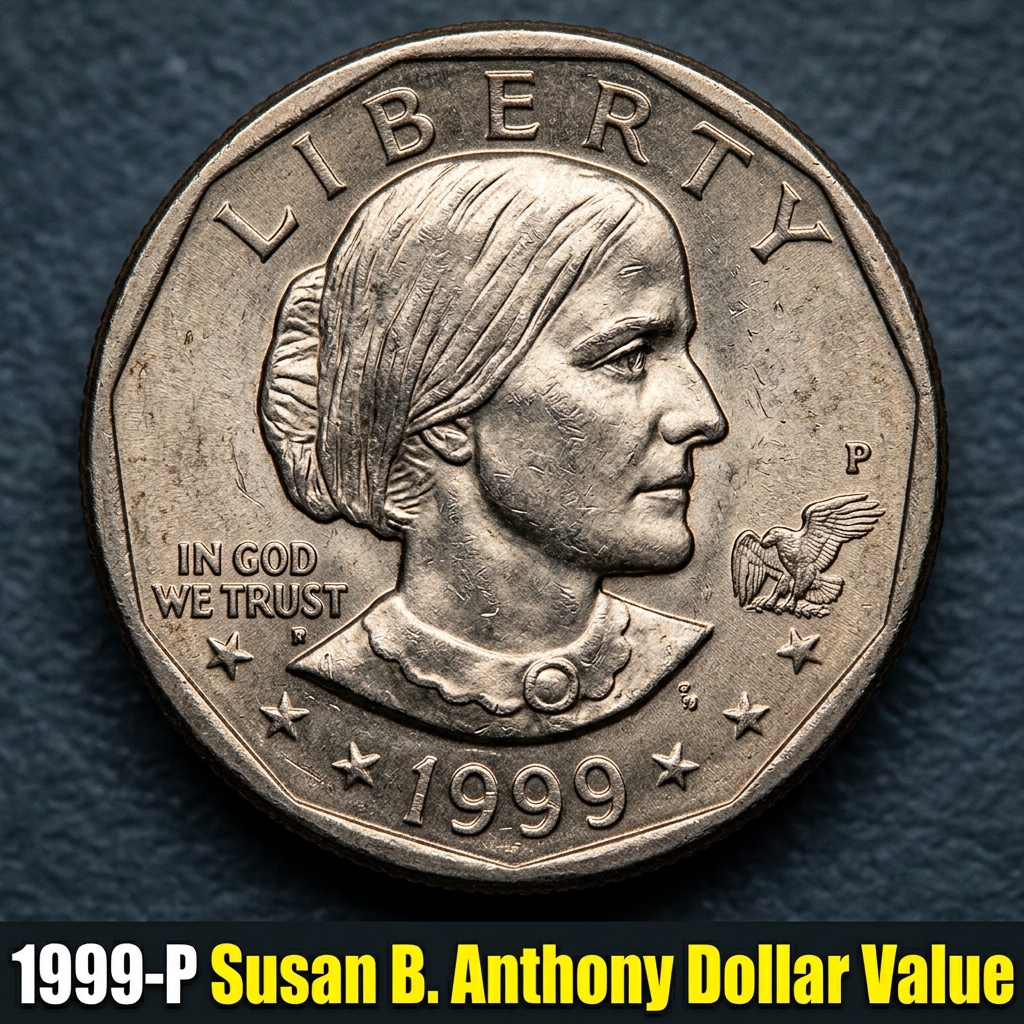
The 1999-P Susan B. Anthony Dollar is worth anywhere from $1 to $2 in circulated condition, but uncirculated examples can fetch $5 to $15 or more depending on grade — and rare high-grade coins have sold for significantly higher at auction. If you found one of these silver-dollar-sized coins tucked away in a drawer or old change jar, you’re in the right place to find out what it’s really worth.
Before we dive in, if you have a coin and want a quick, accurate ID, try using a coin identifier and value app — it can save you a lot of time and guesswork.
A Little Background on the 1999-P Susan B. Anthony Dollar
The Susan B. Anthony Dollar has a surprisingly short and somewhat unusual history. The coin was originally minted from 1979 to 1981, then production stopped entirely — only to be briefly revived in 1999 for one final year. Why 1999? The U.S. Mint brought it back because the country was running low on dollar coin stockpiles while the new Sacagawea Dollar was still being prepared for its 2000 release.
The “P” in 1999-P means the coin was struck at the Philadelphia Mint. That year, Philadelphia produced approximately 29.4 million of these coins — a much smaller mintage compared to the early 1980s production runs, which numbered in the hundreds of millions.
Because the 1999-P was made purely for circulation and not widely saved by the public, finding one in truly uncirculated condition is actually more of a challenge than you might expect.
How Much Is the 1999-P Susan B. Anthony Dollar Worth?
For most people, the honest answer is: face value to a couple of dollars if the coin shows wear. These are not rare coins in the traditional sense, but their value climbs noticeably once you get into mint-state grades.
Here’s a general value breakdown to give you a clear picture:
| Condition / Grade | Estimated Value |
|---|---|
| Circulated (Good to Fine) | $1 – $2 |
| Extremely Fine (EF-45) | $2 – $4 |
| Mint State 63 (MS-63) | $5 – $8 |
| Mint State 65 (MS-65) | $10 – $15 |
| Mint State 67 (MS-67) or higher | $50 – $200+ |
For the most up-to-date market data, you can check live 1999-P Susan B. Anthony Dollar price data by grade on CoinHix — it’s one of the most reliable sources for tracking real auction results.
What Makes Some 1999-P Dollars Worth More Than Others
Coin grading is everything when it comes to value. Two coins from the same year and mint can be worth $1.50 or $150 depending on their condition. Here’s what collectors and dealers look for:
Luster — Uncirculated coins should have a bright, original shine. Any dullness or cloudiness reduces value significantly.
Strike quality — Some 1999-P examples show weak strikes, meaning the details aren’t as sharp as they should be. A well-struck coin with crisp design details is more desirable.
Surface marks — Even coins that were never spent can have contact marks from rattling against other coins in mint bags. Fewer marks means a higher grade and higher value.
If you want to track down detailed 1999-P dollar value information across multiple grades, this resource breaking down 1999 dollar coin values by type and condition is a helpful starting point before you go to a dealer.
Should You Get Your 1999-P Dollar Professionally Graded?
If your coin looks absolutely pristine — no scratches, original luster, sharp details — then professional grading by PCGS or NGC might be worth the cost. A coin that grades MS-67 or above can easily sell for $100 or more, which justifies the grading fee.
However, if your coin has clearly been in circulation or shows any wear, professional grading probably won’t pay off. In that case, it’s worth exactly what it looks like — a dollar coin with modest collector interest.
A quick and free way to get a rough idea before spending money on grading is to use CoinHix, which lets you look up recent sale prices and see where your coin might fall on the value scale. It’s a smart first step for any coin you find at home.
Where to Sell a 1999-P Susan B. Anthony Dollar
You have several solid options depending on how much time you want to invest:
– eBay — Great for reaching active coin collectors. Search completed listings to see what similar coins actually sold for (not just asking prices).
– Local coin shops — Fast and convenient, but dealers will offer wholesale prices, usually 30–50% below retail value.
– Coin shows — A good place to get multiple offers and talk to knowledgeable buyers.
– Online coin forums — Communities like the NGC forum or Reddit’s r/coins can connect you with individual buyers.
Before listing anywhere, use CoinHix to check current market prices so you don’t undersell a coin that’s worth more than you think.
Frequently Asked Questions
Q: Is the 1999-P Susan B. Anthony Dollar made of silver?
A: No. Despite its silver appearance, the 1999-P Susan B. Anthony Dollar is made of a copper-nickel clad composition — the same material used in modern quarters and dimes. It contains no silver and has no precious metal value.
Q: Why was the Susan B. Anthony Dollar made again in 1999 after such a long break?
A: The U.S. Mint needed to replenish dollar coin supplies while the new Sacagawea Dollar was still in development. Rather than rush the new design, they temporarily restarted production of the existing Susan B. Anthony Dollar for one final year.
Q: How do I know if my 1999-P dollar is in good enough condition to be worth grading?
A: Hold the coin under a bright light and tilt it at different angles. If you see an unbroken, mirror-like or satiny sheen across the entire surface with no visible scratches or dull spots, it could be worth a professional look. If you see wear on Susan B. Anthony’s cheekbone or the eagle’s high points, it’s a circulated coin and grading won’t add value.