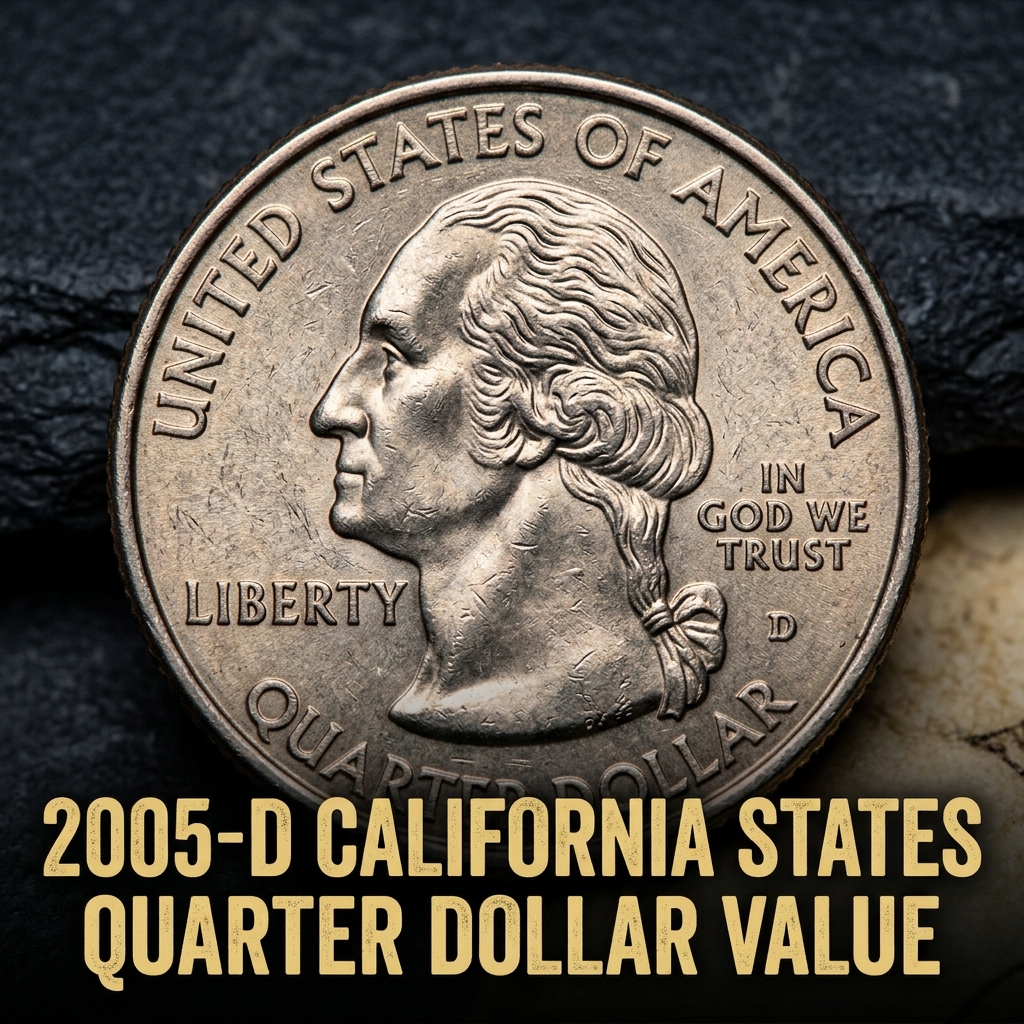
The 2005-D California State Quarter is worth between $0.25 and $1 in average circulated condition, but well-preserved uncirculated examples can fetch anywhere from $5 to over $20 — and certified high-grade specimens have sold for significantly more.
What Makes the 2005-D California Quarter Special
The 2005-D California State Quarter was struck at the Denver Mint as part of the United States Mint’s popular 50 State Quarters Program, which ran from 1999 to 2008. The “D” mintmark tells you exactly where this coin was born — Denver, Colorado.
The reverse design features John Muir, the legendary conservationist, standing before the dramatic backdrop of Yosemite Valley’s Half Dome. A California condor soars above, completing one of the more visually striking designs in the entire State Quarters series.
If you’ve got one of these sitting in a drawer or jar of old change, you’re in good company. Millions of these coins were made — but as you’ll see, condition matters a lot when it comes to real value.
2005-D California Quarter Mintage and Basic Facts
Before we talk dollars, let’s cover the basics. Understanding what you have helps you figure out what it’s worth.
| Feature | Details |
|—|—|
| Year | 2005 |
| Mint | Denver (D) |
| Denomination | 25 cents |
| Composition | Clad (91.67% copper, 8.33% nickel) |
| Diameter | 24.3 mm |
| Weight | 5.67 grams |
| Mintage | 1,764,800,000 |
Yes, you read that right — over 1.7 billion were struck. That massive mintage is exactly why most circulated examples are worth face value or just slightly above. But don’t give up yet. Coins that never passed through pockets and purses are a different story.
If you want to look up current market prices and recent sale data for the 2005-D California Quarter in MS grades, it’s a great starting point for serious collectors.
How Much Is Your 2005-D California Quarter Worth by Grade
Coin grading is the single biggest factor in determining value. Here’s a simple breakdown:
| Condition / Grade | Description | Estimated Value |
|---|---|---|
| Circulated (Good–Fine) | Worn from use, flat details | Face value ($0.25) |
| Extra Fine (XF/EF) | Light wear, most details sharp | $0.50 – $1 |
| Uncirculated (MS-60 to MS-63) | No wear, minor bag marks | $1 – $5 |
| Choice Uncirculated (MS-65) | Sharp strike, minimal marks | $5 – $12 |
| Gem Uncirculated (MS-67+) | Near perfect, fully struck | $20 – $100+ |
High-grade examples certified by PCGS or NGC can command serious premiums, especially at MS-67 and above, where population reports show relatively few examples exist.
For a broader look at what 2005 quarters are worth across different mint marks and grades, you’ll find helpful context beyond just the Denver issue.
Error Coins and Special Varieties Worth More
This is where everyday people sometimes hit a real jackpot. Error coins from this issue do exist, and they can be worth dramatically more than a regular strike.
Double Die Obverse (DDO) — Look closely at the lettering and date with a magnifying glass. Doubling in “IN GOD WE TRUST” or “LIBERTY” can indicate a doubled die variety worth $20 to $100 or more.
Off-Center Strikes — If the design is noticeably shifted off-center (10% or more), collectors pay a big premium. A 50% off-center 2005-D California Quarter could fetch $50 to $200+.
Die Cracks and Cuds — These are raised lines or blobs caused by a cracked die. Minor ones add modest value; major “cud” errors near the rim can be worth $25 to $75.
If you suspect you have something unusual, use a coin identifier and value app to get a quick first look before spending money on professional grading.
CoinHix is one excellent tool for this — it lets you photograph your coin and instantly compare it to known varieties in its database. Many error coin hunters use CoinHix regularly to avoid missing valuable finds hiding in plain sight.
Where to Sell Your 2005-D California Quarter
If you’ve determined your coin is worth more than face value, you have solid options for selling.
eBay remains the most active marketplace for State Quarters. Completed listings will show you exactly what buyers are actually paying — not just asking prices.
Coin shows connect you with knowledgeable dealers face-to-face, which is ideal if you have a handful of coins to sell at once.
PCGS and NGC submission makes sense if you believe your coin grades MS-65 or above. The certification adds buyer confidence and can significantly increase the sale price.
For quick on-the-go research before you commit to selling, CoinHix lets you scan your coin and see real market comparables instantly — a handy tool whether you’re at a flea market or sorting grandma’s change jar.
—
FAQ
Q: Is the 2005-D California Quarter rare?
A: Not in circulated condition. With over 1.7 billion minted, it’s one of the more common State Quarters in circulation. However, high-grade uncirculated examples (MS-67 and above) are genuinely scarce and worth real money to collectors.
Q: What does the “D” mintmark mean on my California Quarter?
A: The “D” stands for the Denver Mint in Denver, Colorado. Coins without a mintmark or with a “P” were made at the Philadelphia Mint. Both versions were made in similarly large quantities in 2005.
Q: How do I know if my 2005-D California Quarter has an error?
A: Examine it under good lighting with a magnifying glass (10x loupe is ideal). Look for doubling in lettering, off-center designs, unusual bumps or raised lines, and missing design elements. A coin identifier app can help with initial screening before you seek a professional opinion.