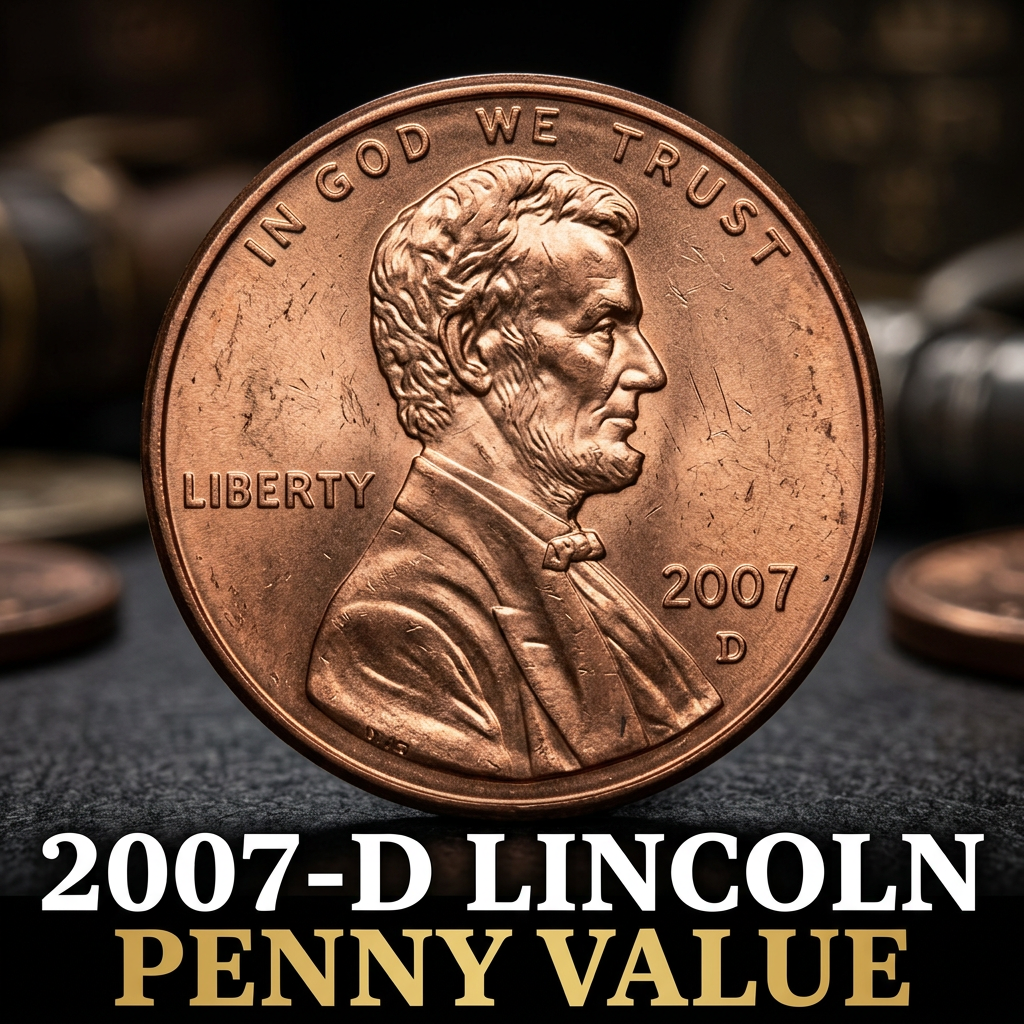
The 2007-D Lincoln Penny is worth face value in most circulated conditions, but uncirculated examples graded MS-65 or higher can fetch anywhere from $1 to over $10, and rare error coins can climb into the hundreds. If you just found one in your change jar, you’re in the right place to find out exactly what you’ve got.
Most people toss pennies aside without a second thought, but a coin collector or curious finder knows that even modern cents can hold surprising value under the right circumstances. The 2007-D penny was struck at the Denver Mint and carries the small “D” mintmark just below the date on the obverse. Millions of these were produced, which is why most circulated examples aren’t worth much above one cent. That said, condition and errors can change the story completely. If you want a fast way to check, a coin identifier and value app can scan your coin and give you a quick estimate right from your phone.
How Much Is a 2007-D Lincoln Penny Worth Today?
The short answer is that most 2007-D pennies you pull out of circulation are worth exactly one cent. The coin was made in huge quantities — over 3.7 billion were struck at the Denver Mint that year — so supply is anything but scarce.
However, coins that were never spent and kept in pristine condition tell a different story. A mint-state example graded MS-63 Red might sell for around $0.30 to $0.50, while a gem-quality MS-65 Red can bring $1 to $3 or more. At the top of the grading scale, MS-67 Red examples have sold for $10 to $40 at auction.
Proof-quality specimens are a different category entirely and were not struck in Denver, so if you’re hoping for a proof, look for coins from the San Francisco Mint instead. For everyday finders, the real question is whether your coin has any visible errors or whether it’s in truly outstanding condition.
| Condition / Grade | Estimated Value |
|---|---|
| Circulated (Good to Fine) | $0.01 (face value) |
| Uncirculated MS-63 Red | $0.30 – $0.75 |
| Gem Uncirculated MS-65 Red | $1.00 – $3.00 |
| Superb Gem MS-67 Red | $10.00 – $40.00+ |
| Error Coins (doubled die, off-center, etc.) | $20.00 – $200.00+ |
You can check current 2007-D Lincoln Penny market prices and recent auction results by grade to see what buyers are actually paying right now.
Error Coins — The Real Hidden Value in Your 2007-D Penny
If you want to find real money in a modern Lincoln cent, error coins are where the action is. Minting errors happen when something goes wrong during the production process, and the resulting coin can be dramatically different from a normal strike.
Common errors to look for on the 2007-D penny include doubled dies, where design elements like letters or Lincoln’s features appear slightly doubled or blurred. Off-center strikes, where the design is not centered on the blank planchet, are another exciting find. A 50% off-center error with a visible date can be worth $50 to $150 or more.
Other errors worth checking include die caps, brockages, and clipped planchets. Even a small 5–10% off-center strike with a clear date can bring $10 to $20 from the right buyer. Use a magnifying glass or loupe and compare your coin carefully against known examples online. The CoinHix app has a growing database of error types and recent sale prices that makes this kind of research much easier.
What Affects the Value of Your 2007-D Penny
Beyond errors, several key factors determine what your coin is worth. Condition is the single biggest driver of value. A coin that came straight from the mint roll and was never spent will have full original luster and sharp details — that’s what graders call “Red” designation, meaning the copper is still bright and unstained.
Surface preservation matters, too. Bag marks, scratches, or cleaning will lower a coin’s grade and value significantly. Never clean a coin with household products — even gentle cleaning can destroy its numismatic value completely.
Color also plays a role. Lincoln pennies are graded as Red (RD), Red-Brown (RB), or Brown (BN). Red coins command the highest premiums, while brown coins sell for much less. For a detailed breakdown of how these factors affect pricing, the complete 2007 penny value guide with grading tips and price data is a great resource worth bookmarking.
Is the 2007-D Lincoln Penny Worth Keeping?
If your coin is circulated and shows wear, there’s no real financial reason to hold onto it unless you enjoy collecting modern cents. However, if it’s in brilliant uncirculated condition, came from a sealed mint roll, or shows a clear minting error, it’s absolutely worth setting aside.
Roll hunting — buying bank rolls of pennies and searching through them — is a hobby that has turned up some genuinely valuable error coins from this era. It’s low-cost, surprisingly fun, and you can always spend the coins you don’t keep. The CoinHix app makes it simple to log your finds, track values, and build a personal collection record right from your pocket.
For anyone getting started in coin collecting or just curious about that old penny on the nightstand, the 2007-D Lincoln cent is a great entry point into the hobby. It’s accessible, affordable, and the chance of finding a valuable error is always just one coin flip away.
—
Frequently Asked Questions
Q: How do I know if my 2007-D penny is uncirculated?
A: An uncirculated coin will show no signs of wear on the high points of the design — Lincoln’s cheekbone, hair, and the wheat stalks or Memorial reverse. The surface should have a bright, even luster with no dull or flat spots. If it looks shiny and sharp, it may be uncirculated. A grading service like PCGS or NGC can confirm this officially.
Q: What makes a 2007-D penny an error coin?
A: Error coins are produced when something goes wrong in the minting process. This includes doubled dies (where design elements appear doubled), off-center strikes (where the coin wasn’t properly centered on the die), or planchet errors (where the metal blank itself was defective). These mistakes make the coin visually distinct and often much more valuable than a normal example.
Q: Should I get my 2007-D penny professionally graded?
A: Professional grading from PCGS or NGC is only worth the cost if your coin is in exceptional condition — typically MS-66 or higher — or if it has a confirmed error. Grading fees can run $20 to $50 or more per coin, so you want to be confident the coin’s potential value justifies the expense. Use CoinHix or another pricing resource first to estimate value before submitting.