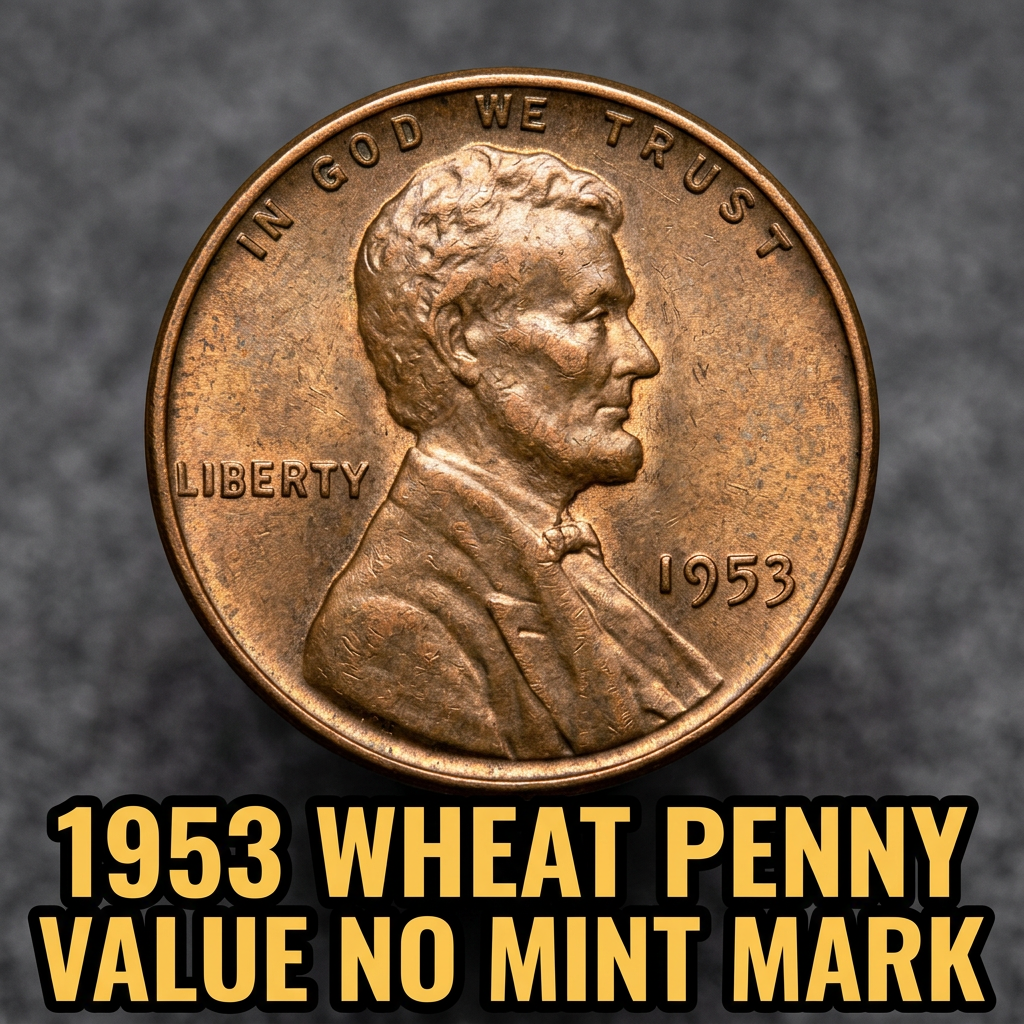
The 1953 Wheat Penny with no mint mark is worth anywhere from $0.10 in heavily worn condition to over $8 in well-preserved circulated grades — and in top mint state condition, certified examples can fetch $50 or more. If you found one of these old copper cents in a coin jar or inherited collection, you’re in the right place to find out exactly what it’s worth.
What Is the 1953 No Mint Mark Wheat Penny?
The 1953 Lincoln Wheat Penny without a mint mark was struck at the Philadelphia Mint, which didn’t use a mint mark during that era. That means every 1953 penny you see with no letter beneath the date came from Philadelphia — one of the most active mints in U.S. history.
Over 256 million of these coins were produced in 1953, making them relatively common. But don’t let that discourage you. Condition matters enormously when it comes to coin values, and even a common date like this one can surprise you depending on how well it was preserved.
If you’re not sure how to read the grade on your coin, a coin identifier and value app can help you get a fast and reliable estimate right from your phone — no numismatic background needed.
1953 Wheat Penny Value Chart by Grade
The value of a 1953 no mint mark Wheat Penny varies quite a bit depending on wear. Here’s a simple breakdown of what you can typically expect:
| Grade | Description | Estimated Value |
|---|---|---|
| Good (G-4) | Heavy wear, outline visible | $0.10 – $0.25 |
| Fine (F-12) | Moderate wear, details readable | $0.25 – $0.50 |
| Extremely Fine (EF-40) | Light wear on high points | $1.00 – $3.00 |
| Mint State (MS-63) | Uncirculated, minor blemishes | $8 – $20 |
| Mint State (MS-65 Red) | Gem uncirculated, full red luster | $35 – $60+ |
For the most up-to-date market data, you can check the 1953 Wheat Penny price data in mint state red grades directly from certified auction records. Prices can shift based on demand and recent sales, so live data always beats a static list.
What Makes a 1953 Wheat Penny More Valuable?
Most 1953 Lincoln cents you’ll come across are circulated, meaning they spent time in pockets and cash registers before being set aside. Those are typically worth face value to a few cents at most.
But here’s where things get interesting: uncirculated examples — coins that never entered commerce — are significantly more valuable. The color of the coin plays a big role too.
Copper pennies are graded on a color spectrum: Brown (BN), Red-Brown (RB), and Red (RD). A coin that retains its original brilliant red copper luster is the most desirable. An MS-65 Red example of the 1953 no mint mark penny is a genuinely attractive coin that collectors actively seek out.
Using CoinHix is a great way to track these price differences in real time. The app breaks down values by grade and color designation so you’re never guessing.
How to Tell If Your 1953 Penny Is Uncirculated
Figuring out whether your coin was ever in circulation can feel tricky, but there are a few things to look for.
First, examine the high points of the coin — Lincoln’s cheekbone, the top of his head, and the wheat stalks on the reverse. If those areas look flat or slightly dull compared to the surrounding fields, the coin has wear and is circulated.
An uncirculated coin should have full, unbroken luster across the entire surface. When you tilt it under a light source, the shine should flow uniformly. Any dull spots or lines from rubbing indicate wear.
You can get a surprisingly accurate read on your coin’s grade using CoinHix, which uses image recognition to help everyday people identify coins and estimate their value quickly. For a more detailed breakdown of what your specific coin might be worth, the full 1953 penny value guide with grade-by-grade pricing is a helpful reference to bookmark.
Should You Clean or Hold On to Your 1953 Wheat Penny?
One of the most common mistakes people make is cleaning old coins. It feels natural — if a coin looks dirty, you might want to polish it up. But cleaning a coin actually destroys its numismatic value almost entirely.
Even if a cleaned coin looks prettier to the naked eye, professional graders will immediately flag it as “cleaned” or “improperly cleaned,” and it will sell for a fraction of what an original-surface coin brings.
If your 1953 no mint mark Wheat Penny has that original dark brown or reddish patina, leave it alone. Store it in a coin flip or non-PVC holder and let it be. If you think it might be high grade, consider sending it to PCGS or NGC for professional grading — it could be worth the investment.
—
FAQ
Q: How many 1953 no mint mark Wheat Pennies were made?
A: The Philadelphia Mint produced approximately 256,883,800 Lincoln Wheat Pennies in 1953. This relatively high mintage makes the coin common in circulated grades but still collectible in top mint state condition.
Q: Is a 1953 penny with no mint mark rare?
A: No, it’s not rare by any definition — but rarity isn’t the only factor in value. A gem uncirculated example with full red color can still command $50 or more due to eye appeal and collector demand.
Q: Where’s the best place to sell a 1953 Wheat Penny?
A: For circulated coins, eBay or local coin shops are your easiest options. For uncirculated or high-grade examples, consider getting the coin certified first through PCGS or NGC, then selling through a coin auction house or verified dealer. Apps like CoinHix can help you understand what your coin is worth before you sell so you don’t leave money on the table.