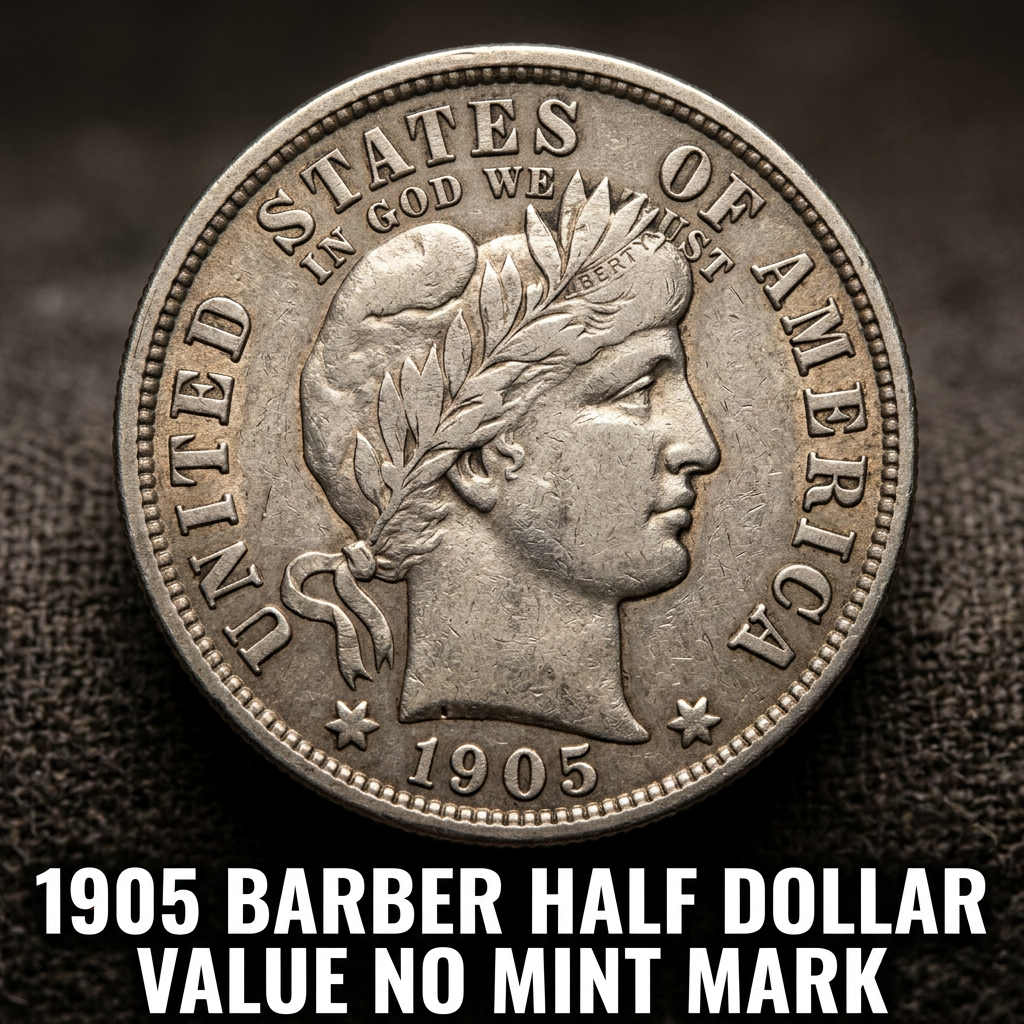
The 1905 Barber Half Dollar (no mint mark) is worth anywhere from $15 in heavily worn condition to well over $500 in high-grade mint state examples. If you found one of these old silver coins tucked away in a drawer or inherited collection, you may be sitting on more than pocket change — and this guide will help you figure out exactly what you have.
What Is the 1905 Barber Half Dollar?
The Barber Half Dollar series ran from 1892 to 1915, named after Charles E. Barber, the U.S. Mint’s Chief Engraver at the time. The obverse features Lady Liberty wearing a laurel wreath and a Phrygian cap, while the reverse shows a heraldic eagle. These coins were made for everyday circulation, so most survivors show significant wear.
The 1905 Philadelphia Mint issue carries no mint mark — coins struck there never did during this era. Philadelphia was the main production facility, and in 1905, it struck 662,727 Barber Half Dollars. That’s a relatively modest mintage compared to other years in the series, which gives this coin a bit of an edge in collector demand.
If you’re trying to identify your coin or check its value quickly, using a coin identifier and value app is one of the fastest ways to get started at home before heading to a dealer.
How Condition Affects the 1905 Barber Half Dollar Value
Coin grading is everything when it comes to value — and the Barber Half Dollar is no different. The scale runs from Poor (P-1) all the way up to Mint State (MS-65 and beyond). Most 1905 Barber Halves you’ll find in old collections fall somewhere in the Fine to Very Fine range.
Here’s a general value breakdown based on grade:
| Grade | Description | Estimated Value |
|---|---|---|
| Good (G-4) | Heavy wear, design visible but flat | $15 – $20 |
| Very Good (VG-8) | Major details clear, some flatness | $22 – $30 |
| Fine (F-12) | Moderate wear, all lettering visible | $35 – $55 |
| Very Fine (VF-20) | Light wear on high points | $65 – $100 |
| Extremely Fine (EF-40) | Slight wear, sharp details | $130 – $200 |
| Mint State (MS-63) | Uncirculated with minor marks | $400 – $600 |
| Mint State (MS-65) | Gem uncirculated, minimal blemishes | $1,000+ |
Keep in mind these are approximate ranges based on recent auction results and dealer pricing. The silver content alone (each Barber Half contains 0.3617 oz of 90% silver) gives even heavily worn coins a baseline melt value that fluctuates with the silver spot price.
What Makes Some 1905 Barber Half Dollars Worth More
Not every 1905 no-mint-mark Barber Half is created equal. A few specific factors can push values significantly higher — or lower.
Luster and strike quality matter enormously in mint state examples. A coin with sharp, full rims and original cartwheel luster will always command a premium. Philadelphia coins from this era sometimes show weak strikes on the eagle’s breast feathers, so a well-struck example stands out.
Certification is another big factor. Coins graded and slabbed by PCGS or NGC are far easier to sell and often fetch better prices at auction. If you think yours might be uncirculated, it’s worth the cost of professional grading.
Toning can either help or hurt value. Original, naturally toned coins with attractive golden or rose hues can sell for premiums, while artificially toned or cleaned coins are heavily discounted. Never clean an old coin — it almost always destroys collector value.
For a broader look at which half dollars are worth serious money, the Barber series consistently ranks among the most collectible American coin types from the late 19th and early 20th centuries.
How to Check Your 1905 Barber Half Dollar Value at Home
Before visiting a dealer or listing your coin online, there are a few easy steps you can take yourself.
First, check the mint mark area — on a Barber Half Dollar, the mint mark appears on the reverse side, just below the eagle’s tail feathers. If you see nothing there, you have a Philadelphia coin. If you see an “O,” it’s New Orleans; “S” is San Francisco; “D” is Denver.
Next, assess the wear honestly. Look at the highest points on the obverse — the top of Liberty’s cap and her cheek — and on the reverse, the eagle’s breast. The more detail remaining, the higher the grade.
CoinHix is a great tool for this — the app lets you photograph your coin and get an instant grade estimate and value range right from your phone. It’s fast, beginner-friendly, and saves you a trip to the coin shop for a basic first opinion.
Finally, cross-reference your findings with recent auction records on sites like Heritage Auctions or eBay completed listings to see real-world prices for comparable examples.
FAQ
Q: Is the 1905 Barber Half Dollar made of real silver?
A: Yes. Like all Barber Half Dollars, the 1905 issue is composed of 90% silver and 10% copper. It contains 0.3617 troy ounces of silver, giving it a melt value that moves with the silver spot price — currently around $7–$9 in metal value alone.
Q: How do I know if my 1905 Barber Half Dollar is valuable?
A: The biggest factors are grade (condition), luster, and whether it’s been cleaned or altered. Use CoinHix to get a quick at-home assessment, then compare to recent sold listings online. Uncirculated examples are rare and worth significantly more than circulated ones.
Q: Where is the best place to sell a 1905 Barber Half Dollar?
A: For circulated coins in lower grades, a local coin dealer is convenient and quick. For better-quality examples, consider submitting to PCGS or NGC for grading first, then selling through Heritage Auctions or a major coin show for the best returns.