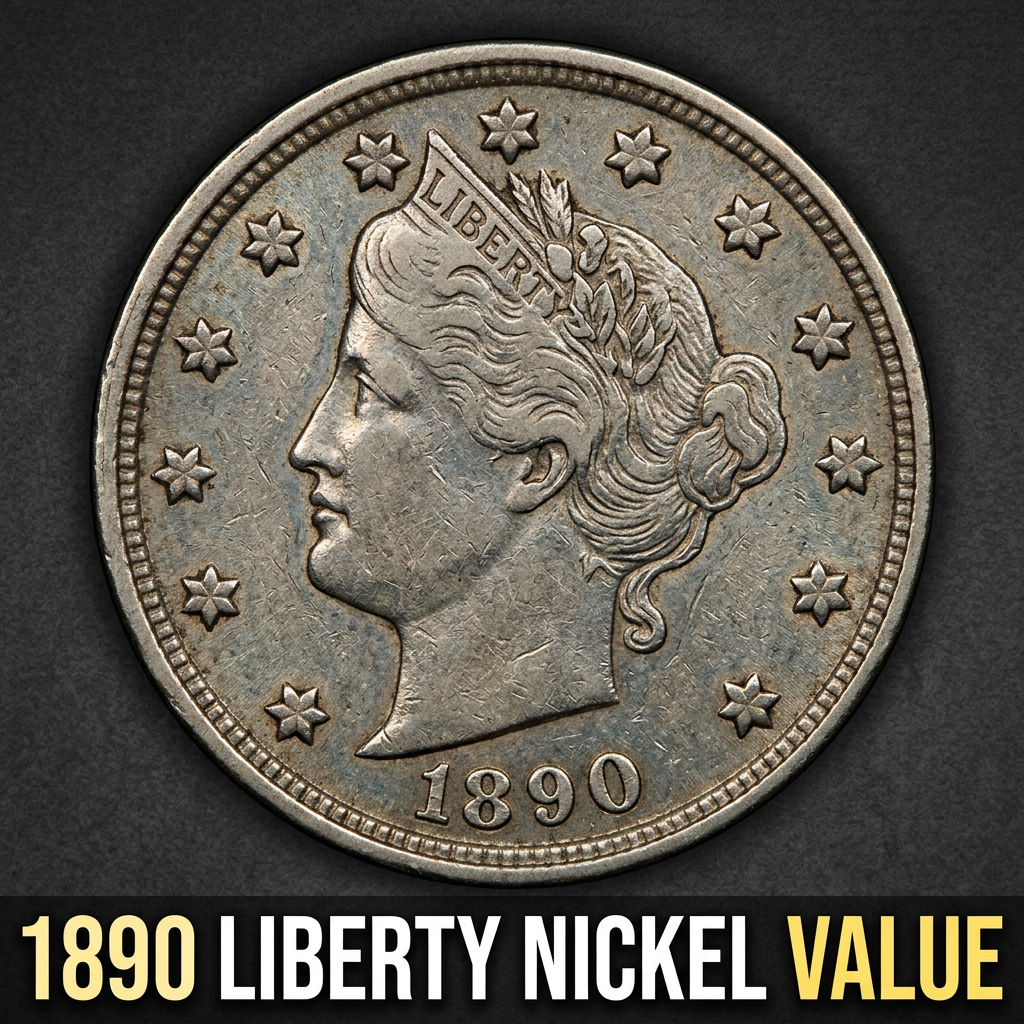
The 1890 Liberty Nickel is worth anywhere from $2 to $5 in heavily worn condition, to over $100 or more in well-preserved mint state examples. If you just pulled one of these old nickels out of a jar or inherited it from a relative, you might be sitting on more than pocket change — and this guide will help you figure out exactly what you have.
What Is the 1890 Liberty Nickel?
The 1890 Liberty Nickel is part of the classic Liberty Head nickel series, also known as the “V Nickel” because of the Roman numeral “V” stamped on the reverse. These coins were designed by Charles Barber and minted from 1883 to 1912. The obverse features a left-facing portrait of Lady Liberty surrounded by stars, while the reverse simply shows a large “V” inside a wreath with the denomination spelled out.
If you’re not sure whether the coin you’re holding is actually a Liberty Nickel or something else, a coin identifier and value app can help you match the design and date in seconds. Tools like this are a game-changer for everyday people who find old coins and want quick, accurate answers.
In 1890, the Philadelphia Mint produced approximately 16,259,272 Liberty Nickels — a relatively high mintage, which is one reason most circulated examples are modestly priced. Still, condition plays a massive role in how much your coin is actually worth.
How Much Is the 1890 Liberty Nickel Worth by Grade?
Coin values are almost entirely driven by condition, or “grade” in collector language. A coin graded Good (G-4) shows heavy wear, with major design elements still visible but flat and soft. A coin in Fine (F-12) condition has moderate wear with clearer lettering and detail. Extremely Fine (EF-40) coins show only slight wear on the high points, and Mint State (MS) coins were never circulated at all.
Here’s a general value breakdown for the 1890 Liberty Nickel:
| Grade | Estimated Value |
|---|---|
| Good (G-4) | $2 – $4 |
| Fine (F-12) | $6 – $12 |
| Extremely Fine (EF-40) | $20 – $35 |
| About Uncirculated (AU-50) | $45 – $70 |
| Mint State (MS-60) | $80 – $120 |
| Mint State (MS-65) | $250 – $500+ |
For the most up-to-date pricing based on recent auction results, you can check out 1890 Liberty Nickel prices in mint state grades to see what collectors are actually paying right now.
Key Factors That Affect the 1890 Liberty Nickel Value
Beyond grade, a few other things can push the value of your 1890 Liberty Nickel up or down.
Strike quality matters — some 1890 nickels came out of the mint with weak strikes, meaning the design details never fully formed even when the coin left the press. A weakly struck coin in MS-63 might sell for less than a sharply struck one in the same grade.
Luster and eye appeal are also huge factors in mint state coins. A coin with original, frosty luster and no distracting marks or cleaning will always command more than a dull or cleaned example, even at the same technical grade.
Cleaning is a major value killer. If someone polished or cleaned the coin at some point — even with the best intentions — it can reduce the value significantly. Professional graders can almost always tell. Never clean an old coin before having it evaluated.
If you want to understand all these nuances quickly without hiring an expert, CoinHix is a fantastic resource that breaks down coin values by grade, variety, and condition factors in a clear, easy-to-understand format.
Is the 1890 Liberty Nickel Rare?
With over 16 million struck, the 1890 Liberty Nickel is not considered a rare coin in circulated grades. You’ll find plenty of them in dealer cases and coin shows at affordable prices. However, truly high-grade examples — particularly those graded MS-65 or better by PCGS or NGC — become genuinely scarce and can be worth several hundred dollars to serious collectors.
There are no major known varieties for the 1890 Liberty Nickel that carry dramatic premiums, unlike some other years in the series. So if you’re hoping you have a hidden rarity, the 1890 is probably not your lottery ticket — but it’s still a beautiful, historic piece worth preserving properly.
For context, if you’re also exploring other 19th-century coins in your collection, it helps to compare values across different denominations. For example, you can read about what an 1890 silver dollar is worth to see just how dramatically coin values can vary depending on the metal, series, and grade.
How to Find Out What Your Coin Is Worth
The fastest way to get a real-world value for your 1890 Liberty Nickel is to use CoinHix, which pulls live pricing data from actual auction records and dealer sales. It’s free, easy to use, and you don’t need any coin expertise to get started.
If you want to go further and get your coin officially graded, submitting it to PCGS or NGC is the gold standard. A certified grade in a tamper-evident holder adds credibility and often increases resale value, especially for coins in EF or better condition.
For a quick at-home assessment, look at the coin under good lighting and compare it to grading photos online. Pay attention to Liberty’s hair detail above the ear and the lettering around the edge — these are the first areas to wear down on circulated coins.
—
Frequently Asked Questions
Q: Is the 1890 Liberty Nickel made of silver?
A: No. Despite being called a “nickel,” the 1890 Liberty Nickel is made of 75% copper and 25% nickel. It contains no silver, so its value is entirely based on collectibility and condition rather than metal content.
Q: How can I tell if my coin has been cleaned?
A: Cleaned coins often show fine hairline scratches under magnification, an unnaturally bright or shiny surface, or a “washed out” look compared to coins with original luster. If the coin looks almost too shiny for its age, it may have been polished at some point.
Q: Where is the best place to sell a 1890 Liberty Nickel?
A: For common circulated examples, eBay or a local coin dealer are your easiest options. For higher-grade coins worth $50 or more, consider having it certified first and selling through a reputable auction house or using CoinHix to connect with serious buyers who pay fair market prices.