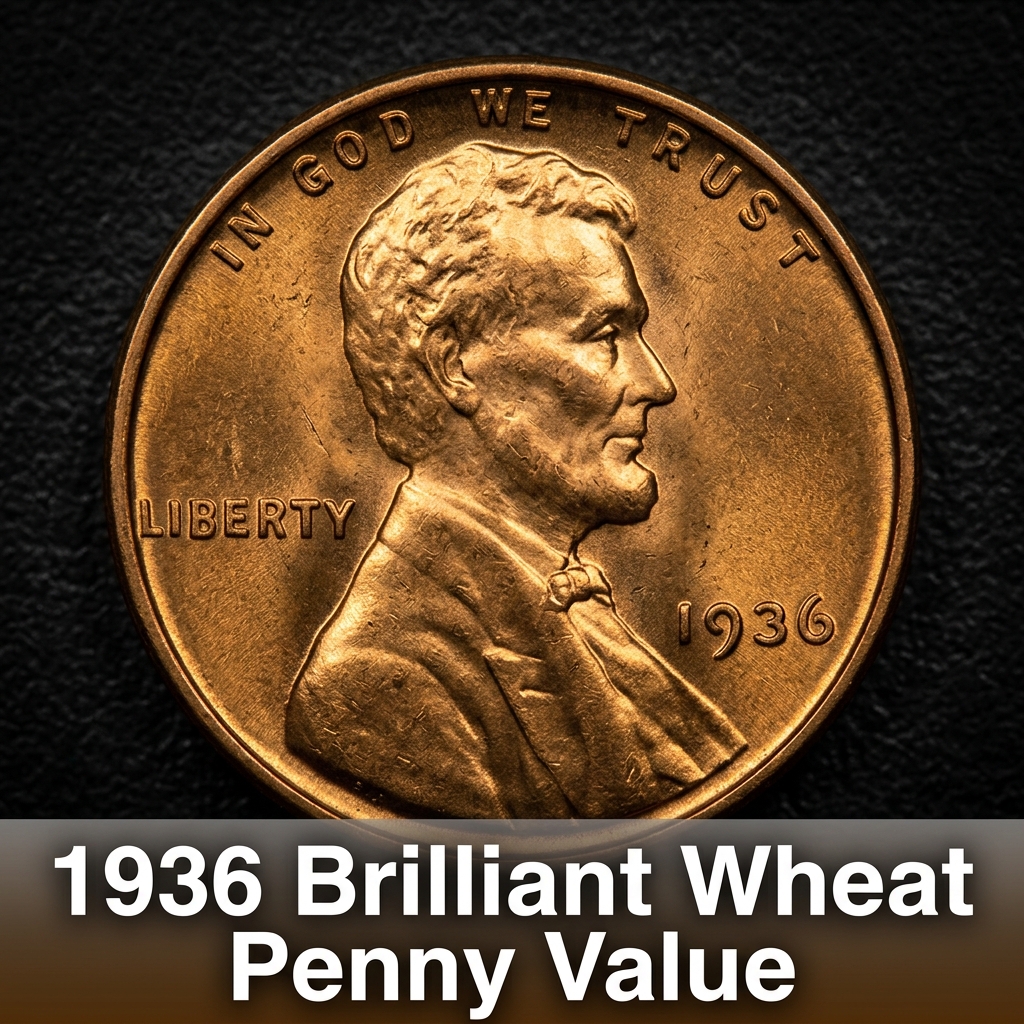
The 1936 Wheat Penny is worth anywhere from $0.10 in heavily worn condition to over $100 or more in brilliant uncirculated grades — and certain mint mark varieties can push that number even higher. If you recently came across one of these old Lincoln cents, you’re in the right place to find out exactly what you’ve got.
—
What Makes the 1936 Wheat Penny Special
The 1936 Lincoln Wheat Penny was struck during the Great Depression, a time when every cent truly counted. Despite the economic hardship of the era, the Philadelphia, Denver, and San Francisco Mints all produced large quantities of this coin, making it relatively common in circulated grades but genuinely exciting when found in brilliant, uncirculated condition.
The obverse features Victor David Brenner’s iconic portrait of Abraham Lincoln, while the reverse displays two stalks of wheat framing the words “ONE CENT” — the design that gave these coins their beloved nickname. Lincoln Wheat Pennies were minted from 1909 to 1958, and the 1936 issue sits right in the middle of the series.
If you’re not sure which coin you have or want to identify it quickly, a coin identifier and value app can help you confirm the date, mint mark, and estimated value in seconds. Tools like this are especially helpful for everyday collectors who are just starting out.
—
1936 Wheat Penny Value by Mint Mark and Grade
There are three main versions of the 1936 Wheat Penny: the Philadelphia issue (no mint mark), the Denver issue (D mint mark), and the San Francisco issue (S mint mark). Each one carries a different level of rarity and collector demand, which directly affects its value.
The Philadelphia Mint produced over 309 million coins that year — the largest mintage of the three. The Denver Mint struck around 40 million, and San Francisco produced roughly 29 million. Lower mintage generally means higher value, especially in uncirculated grades.
Here’s a quick breakdown of 1936 Wheat Penny values across different grades and mint marks:
| Variety | Good (G-4) | Fine (F-12) | MS-63 RB | MS-65 RD |
|---|---|---|---|---|
| 1936 (No Mint Mark) | $0.10 | $0.25 | $6–$12 | $30–$60 |
| 1936-D | $0.25 | $0.50 | $10–$20 | $50–$100 |
| 1936-S | $0.35 | $0.75 | $12–$25 | $60–$120+ |
For more detailed pricing across all grades, you can view the full 1936 Wheat Penny MS-RD price data on CoinHix, which tracks real auction results and collector market trends.
—
What Condition Does to the Value
Grade — or condition — is probably the single biggest factor in determining what your 1936 Brilliant Wheat Penny is worth. A coin pulled from a jar in someone’s attic has likely been circulated heavily, which means most of the fine details on Lincoln’s portrait and the wheat stalks have worn smooth.
A coin in “Good” condition shows major design elements but significant wear. “Fine” means moderate wear with some detail remaining. Uncirculated coins — those that never saw everyday use — are graded on the Mint State (MS) scale from 60 to 70.
The “brilliant” in “brilliant wheat penny” refers specifically to coins that retain their original red copper luster. Graders designate these as RD (Red). A coin that has partially toned to brown and red is called RB (Red-Brown), and a fully toned brown coin is BN (Brown). Red coins are worth the most because they look closest to the day they left the mint.
CoinHix is a great resource to cross-reference your coin’s condition with current market prices before you sell or trade.
—
Rare Errors and Varieties Worth Knowing
Beyond the standard issues, the 1936 Wheat Penny has a few notable error coins and varieties that can dramatically increase its value. Error coins are always exciting because even a common-date penny can become a collector’s prize if it has a mint mistake.
One of the most talked-about 1936 varieties is the Doubled Die Obverse, where Lincoln’s lettering or portrait shows slight doubling due to a misalignment in the hubbing process. These are rare but real, and they can fetch multiples of the standard coin’s value.
There’s also the 1936 Proof Wheat Penny — yes, Proof coins existed in 1936, though they were made in very limited quantities for collectors. A genuine 1936 Proof cent in pristine condition can sell for several hundred dollars.
For a thorough breakdown of 1936 penny value by variety and error type, it’s worth taking a few extra minutes to study the details of your coin under magnification before assuming it’s an ordinary example.
—
How to Check What Your Coin Is Worth Today
If you’ve found a 1936 Wheat Penny and you’re ready to get a real-world estimate, there are a few practical steps to take. First, examine the coin under good lighting and look for the mint mark just below the date on the obverse. No mint mark means Philadelphia; a small “D” means Denver; an “S” means San Francisco.
Next, assess the coin’s condition honestly. Is it shiny with red copper color? That’s great news. Is it dark and heavily worn? It’s still a cool piece of history, just not a high-dollar coin.
Download CoinHix on your phone for fast lookups, photo recognition, and up-to-date pricing. It’s a favorite among everyday coin finders who don’t want to wade through complicated price guides. Whether your 1936 Wheat Penny is worth a dime or a hundred dollars, knowing the facts helps you make the right call.
—
FAQ
Q: Is a 1936 Wheat Penny rare?
A: Not in most circulated grades — over 370 million were minted across all three facilities. However, high-grade brilliant red examples and certain error varieties are genuinely scarce and collectible.
Q: How do I know if my 1936 penny has a mint mark?
A: Look just below the date on the front (obverse) of the coin. A small “D” means it was made in Denver, an “S” means San Francisco, and no letter at all means it came from Philadelphia.
Q: Where can I sell a 1936 Wheat Penny?
A: You can sell on platforms like eBay, at local coin shows, or through a reputable coin dealer. For higher-grade or error coins, consider getting it professionally graded by PCGS or NGC first — it can significantly increase buyer confidence and sale price.