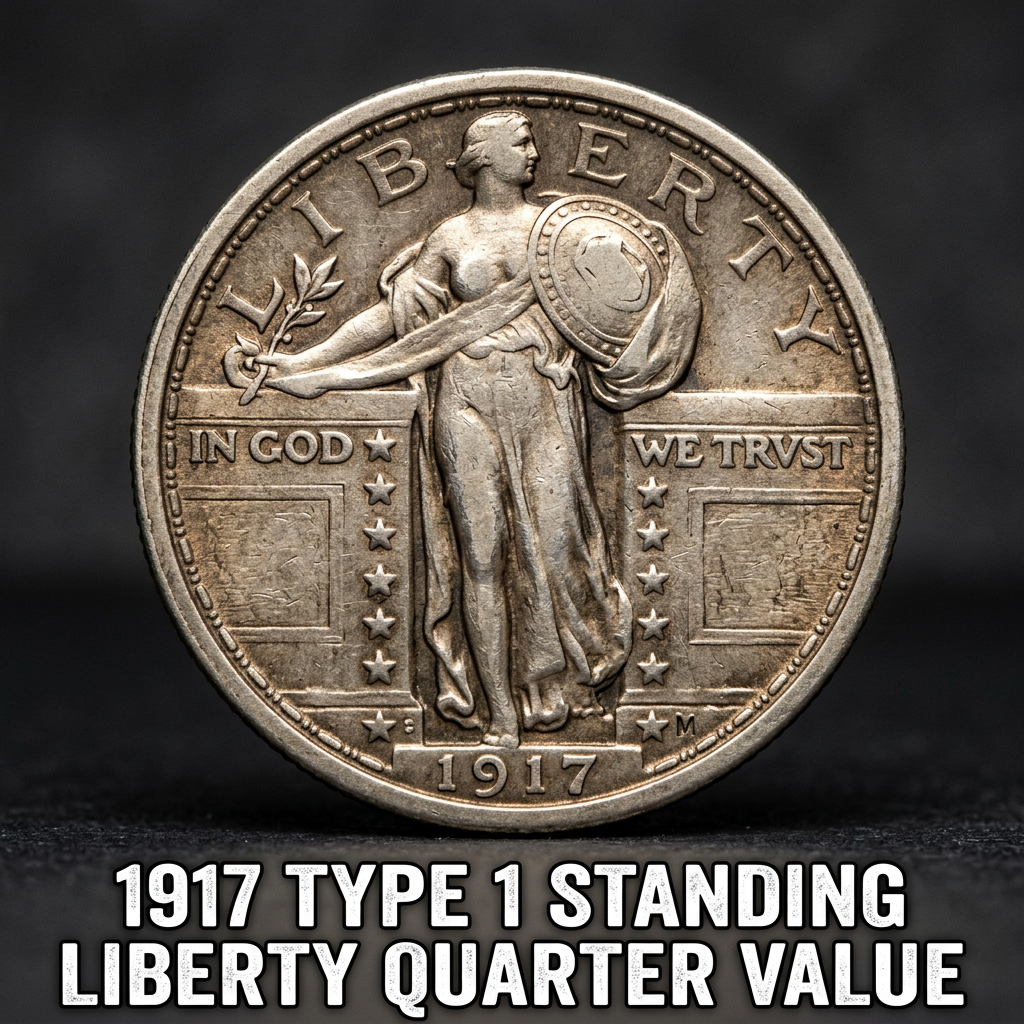
The 1917 Type 1 Standing Liberty Quarter is worth anywhere from $30 in heavily worn condition to well over $1,500 or more in high mint state grades — and certain rare examples have sold for tens of thousands of dollars at auction. If you found one of these coins in an old collection or tucked away in a drawer, you may be holding something genuinely valuable.
What Makes the 1917 Type 1 So Special?
The Standing Liberty Quarter was first introduced in 1916, but 1917 marked the first full year of production — and the Type 1 design is particularly iconic. Sculptor Hermon Atkins MacNeil created the design, featuring Lady Liberty standing in an open gateway with her right side exposed. This design was actually controversial at the time and was modified later that same year (giving us the Type 2), making the Type 1 a short-lived and historically significant issue.
If you’re just getting into coin collecting or trying to identify what you’ve got, using a coin identifier and value app can be a quick and reliable way to get a preliminary idea of what your coin might be worth before you take it to a dealer.
Three mint facilities struck the 1917 Type 1 quarter: Philadelphia (no mint mark), Denver (D), and San Francisco (S). The mint mark, if present, appears on the obverse of the coin beneath the eagle. Each variety carries a different value, so knowing which one you have matters quite a bit.
How Much Is the 1917 Type 1 Standing Liberty Quarter Worth?
Value depends heavily on condition, mint mark, and whether the coin’s date has been struck clearly. One of the common issues with Standing Liberty Quarters is a weak or worn date — this can significantly reduce a coin’s value even if the rest of the design looks sharp.
Here’s a general breakdown of 1917 Type 1 Standing Liberty Quarter values by grade and mint mark:
| Grade | Philadelphia (No MM) | Denver (D) | San Francisco (S) |
|---|---|---|---|
| Good (G-4) | $30–$40 | $35–$50 | $35–$50 |
| Fine (F-12) | $60–$80 | $75–$100 | $75–$100 |
| Extremely Fine (EF-40) | $150–$200 | $175–$250 | $175–$250 |
| Mint State (MS-63) | $400–$600 | $500–$800 | $500–$800 |
| Mint State (MS-65+) | $1,500+ | $2,500+ | $2,000+ |
For the most up-to-date pricing across all grades and mint marks, you can check the 1917 Type 1 Standing Liberty Quarter price data on CoinHix, which tracks real market values based on recent sales.
Key Things That Affect Your Coin’s Value
Beyond the grade, a few specific factors can push the value of a 1917 Type 1 quarter up or down dramatically.
Full Head (FH) designation is one of the biggest value drivers. If Lady Liberty’s helmet shows complete, sharp details — the three leaves, the cheekline, and the helmet’s inner detail — professional grading services like PCGS or NGC may award it a Full Head designation. An MS-65 FH coin can be worth several times more than the same grade without it.
Cleaning or artificial toning will hurt value significantly. Many old silver coins were cleaned at some point, which leaves hairline scratches under magnification and makes them undesirable to serious collectors.
Original skin (the natural surface of an uncleaned coin) and attractive original toning are huge pluses. Dealers and collectors pay a premium for coins that haven’t been tampered with.
If you want a reliable breakdown of the 1917 quarter’s value across all conditions and varieties, that resource walks through the pricing in plain language that’s easy for anyone to understand.
How to Check Your Coin With CoinHix
One of the fastest ways to research what your 1917 Type 1 Standing Liberty Quarter is worth is to use CoinHix, a free tool that gives you real market data based on actual auction results and dealer listings. Instead of guessing or relying on outdated price guides, CoinHix shows you what these coins are actually selling for right now.
Whether you’re a first-time finder or a seasoned collector, having access to live pricing data makes a real difference when you’re trying to decide whether to sell, grade, or hold onto a coin.
Should You Get It Graded?
If your coin looks sharp, has a clear date, and doesn’t appear to have been cleaned, it may absolutely be worth sending to a professional grading service. PCGS and NGC are the two most trusted names in coin grading. The cost to submit typically runs $20–$50 per coin, and for a high-grade 1917 Type 1 quarter, that investment can easily pay off many times over.
For coins in lower grades (Good to Fine), professional grading usually isn’t worth the cost. But if you’re unsure, CoinHix can help you get a clearer picture of where your coin might land before you spend money on submission.
FAQ
Q: How do I tell the difference between a 1917 Type 1 and Type 2 Standing Liberty Quarter?
A: The Type 1 shows Lady Liberty with her right breast exposed and three stars beneath the eagle on the reverse. The Type 2, introduced later in 1917, features a chain mail covering over Liberty’s chest and has the stars repositioned to flank the eagle on the sides. If your coin shows exposed skin on Liberty’s torso, it’s a Type 1.
Q: Is a 1917 Standing Liberty Quarter made of silver?
A: Yes. The 1917 Type 1 Standing Liberty Quarter is composed of 90% silver and 10% copper, with a total weight of 6.25 grams. At today’s silver prices, even a heavily worn example carries meaningful melt value — typically around $5–$7 depending on current spot prices, though numismatic value is almost always higher.
Q: What’s the most valuable 1917 Type 1 quarter ever sold?
A: High-end examples graded MS-67 or better with Full Head designation have sold at major auctions for $20,000 to well over $50,000. These are exceptionally rare survivors at the top of the grading scale, but they prove just how valuable this coin can become in pristine condition.