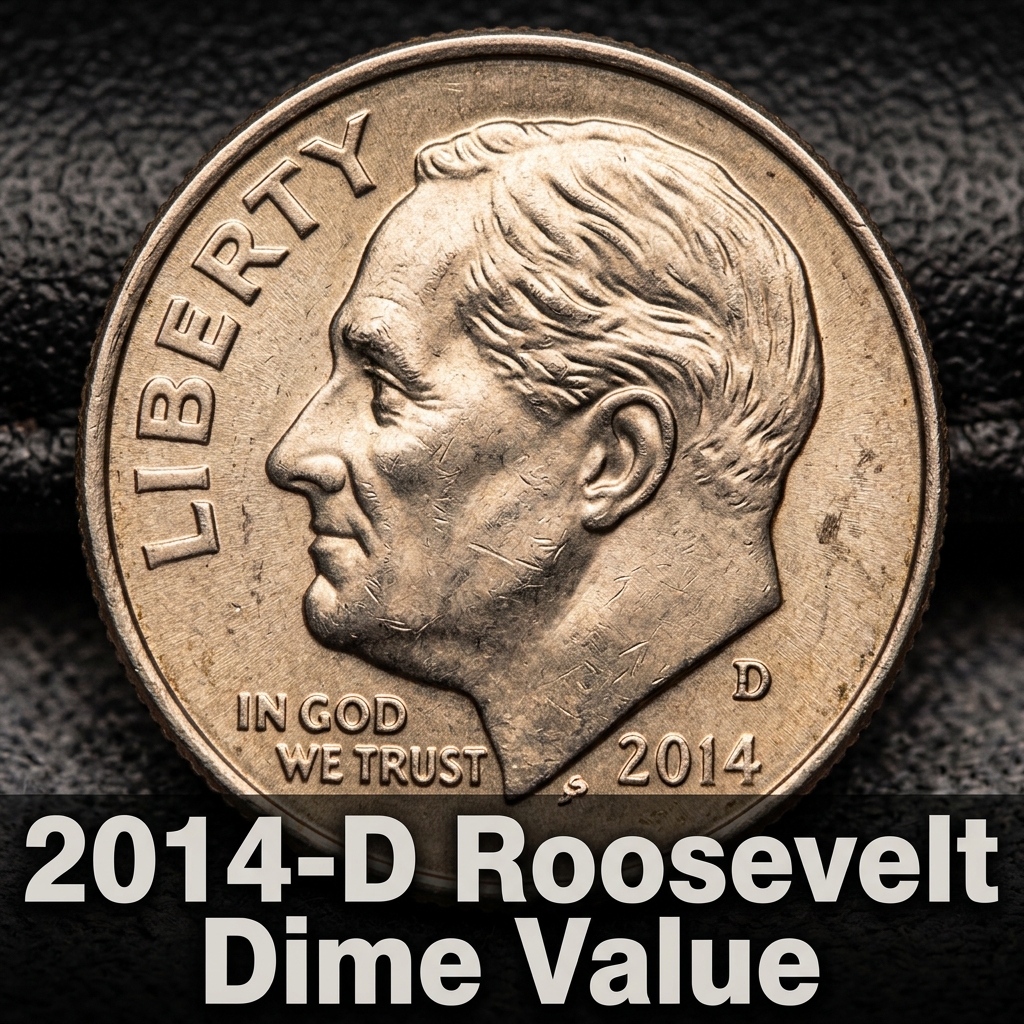
The 2014-D Roosevelt Dime is worth anywhere from 10 cents in circulated condition to around $5 or more in pristine mint state — and a handful of certified high-grade examples have sold for significantly more at auction. If you found one in your change or dug it out of an old coin jar, here’s everything you need to know about what you’ve got.
What Is the 2014-D Roosevelt Dime?
The 2014-D Roosevelt Dime was struck at the Denver Mint, which is why it carries the small “D” mint mark on the obverse, just above the date. Roosevelt dimes have been produced since 1946, honoring President Franklin D. Roosevelt and his connection to the March of Dimes charity. These coins are made of a copper-nickel clad composition — no silver unless you’re looking at special proof issues.
Millions of these coins were made in 2014, which means they’re not rare in the traditional sense. But that doesn’t mean they’re always worth just face value. Condition matters enormously in the coin world, and a 2014-D dime that never touched a pocket or cash register can actually be a decent little find.
If you’re not sure what you have or want to quickly identify other coins in your collection, a coin identifier and value app can save you a lot of time and guesswork — especially if you’re new to coin collecting.
How Much Is a 2014-D Dime Worth Today
For most people, a 2014-D Roosevelt Dime pulled from circulation is worth exactly 10 cents. These coins are common, and unless they’re in exceptional condition, dealers and collectors aren’t going to pay a premium for them.
That said, uncirculated examples — especially those graded MS65 or higher by a third-party grading service like PCGS or NGC — can be worth anywhere from $2 to $5 or even more. Coins graded MS67 or MS68 are rare enough that they command serious collector attention and higher prices.
Here’s a quick breakdown of typical 2014-D Roosevelt Dime values based on condition:
| Grade / Condition | Estimated Value |
|---|---|
| Circulated (Good to Fine) | Face value ($0.10) |
| Extremely Fine (EF40-EF45) | $0.10 – $0.25 |
| Mint State MS63 | $1 – $2 |
| Mint State MS65 | $2 – $5 |
| Mint State MS67+ | $10 – $30+ |
For the most up-to-date auction results and market pricing, you can check the latest 2014 Roosevelt Dime price data across mint state grades to see exactly what certified coins are selling for right now.
Mint Mark and Mintage Numbers
The Denver Mint produced a massive number of 2014-D Roosevelt Dimes. The mintage for this coin was in the hundreds of millions — making it one of the more abundant modern dimes out there. High mintage is generally the enemy of coin value, because supply far exceeds collector demand.
However, high-grade survivors are a different story. Even when billions of coins are made, very few come out of the mint with perfect surfaces and full luster. Population reports from PCGS and NGC show that coins graded MS67 or above are genuinely scarce, which is why they fetch premiums when they do show up.
The “D” mint mark itself doesn’t add significant value over a “P” (Philadelphia) issue in most grades, but it’s still the coin most commonly found in the western United States. Both are equally collectible for date-and-mint-mark sets.
How to Tell If Your 2014-D Dime Is Worth More Than Face Value
The easiest way to assess your coin’s condition is to look at it under good lighting — natural light or a desk lamp works well. A circulated dime will show wear on Roosevelt’s cheek, hair details, and along the torch and flame design on the reverse. If those details are sharp and the coin has a bright, original shine, you might have an uncirculated piece.
Look for bag marks, which are small nicks or contact marks from when coins bump into each other during production and transport. Fewer marks generally mean a higher grade. Coins with full, clean luster and sharp strike are the ones collectors want.
CoinHix makes this process much easier. The CoinHix app lets you photograph your coin and get an instant grade estimate and market value — perfect if you’re not sure whether your 2014-D dime is worth sending to a professional grader. It’s a great first step before spending money on third-party certification.
You can also get a broader look at the full 2014 dime value breakdown including both Denver and Philadelphia issues to compare what the same coin looks like across different grades and mint marks.
Should You Hold Onto Your 2014-D Roosevelt Dime
Honestly, for most people the answer is no — unless your coin is in exceptional uncirculated condition. A worn 2014-D dime is still legal tender worth exactly 10 cents, and even coin dealers aren’t going to offer more than that for a circulated example.
That said, if you’re building a Roosevelt dime set by date and mint mark, the 2014-D is a must-have, and it’s easy and affordable to acquire in high grades. For casual collectors, picking up an MS65 or MS66 example from a reputable dealer for a couple of dollars is a smart move — and if you happen to stumble onto an MS67+, hang onto it.
Use CoinHix to track your collection’s value over time and stay current with market trends. Coin values shift, and what’s worth $5 today might be worth more tomorrow if a particular date becomes more popular with collectors.
Frequently Asked Questions
Q: Is the 2014-D Roosevelt Dime made of silver?
A: No. The 2014-D Roosevelt Dime is made of a copper-nickel clad composition — 75% copper and 25% nickel. Silver Roosevelt dimes were only produced from 1946 to 1964. If you’re hoping for silver, check dimes dated 1964 or earlier.
Q: How can I tell if my 2014-D dime is uncirculated?
A: An uncirculated dime will have full original luster (a bright, cartwheel-like shine when you tilt it under light), no wear on the high points of the design, and relatively few contact marks. If the coin looks dull, flat, or shows any rubbing on Roosevelt’s portrait, it has been circulated.
Q: Where is the mint mark on a 2014-D Roosevelt Dime?
A: The mint mark “D” is located on the obverse (front) of the coin, just above the date on the left side. It’s a small letter but easy to spot with a basic magnifying glass or even a phone camera zoom.